

Learn about the joyful celebration of Vinayaka Chavithi in Telugu culture. This important day honors Lord Ganesha, who is believed to remove obstacles. It marks fresh starts and spiritual paths. Find out about the unique customs that make this festival special in Telugu homes, setting it apart from celebrations in other parts of India.
“Exploring Vinayaka Chavithi: Its Significance and Celebration in Telugu Culture”
Vinayaka Chavithi in Telugu Culture: A Joyous and Significant Celebration for Many
“Vinayaka Chavithi in Telugu Culture: A Joyous and Significant Celebration for Many” It’s celebrated with lots of joy & meaning. This special day honors Lord Ganesha, who is famous for removing obstacles. It marks the start of new beginnings and spiritual journeys. In Telugu homes, families come together to observe Vinayaka Chavithi with many traditional practices. This makes it special and different from other places in India.
In Telugu culture, Vinayaka Chavithi has huge importance. It’s not just religious but also a cultural event bringing families and communities together. It marks new beginnings, prosperity & removing obstacles. “Vinayaka Chavithi” is also called as “Ganesh Chaturthi” on other Parts of India.
For students & professionals, it’s a time to seek blessings. Before tests or starting new projects, many individuals turn to prayer. Additionally, the festival showcases creative skills by featuring the crafting of detailed Ganesha figures. Moreover, it includes the creation of ornate decorations in both homes and public areas.
The fun starts with making clay idols of Ganesha. Families then offer heartfelt prayers during the puja. This lively celebration shows off the rich cultural heritage of the Telugu folks.
Let’s dive into the traditions, rituals & spiritual meaning that make “Vinayaka Chavithi in Telugu Culture” so loved.
“The Telugu heritage has deeply tied Vinayaka Chavithi to its roots, dating all the way back to the 17th-century Maratha rule.” It gained even more importance during India’s push for independence when Lokmanya Bala Gangadhar Tilak used it to unite Hindus against British rule.
In Telugu regions, people have been celebrating this festival for countless years, each area adding its own unique traditions & touches. The earliest known celebrations go all the way back to the Satavahana dynasty in Andhra Pradesh.”
A Divine Birth
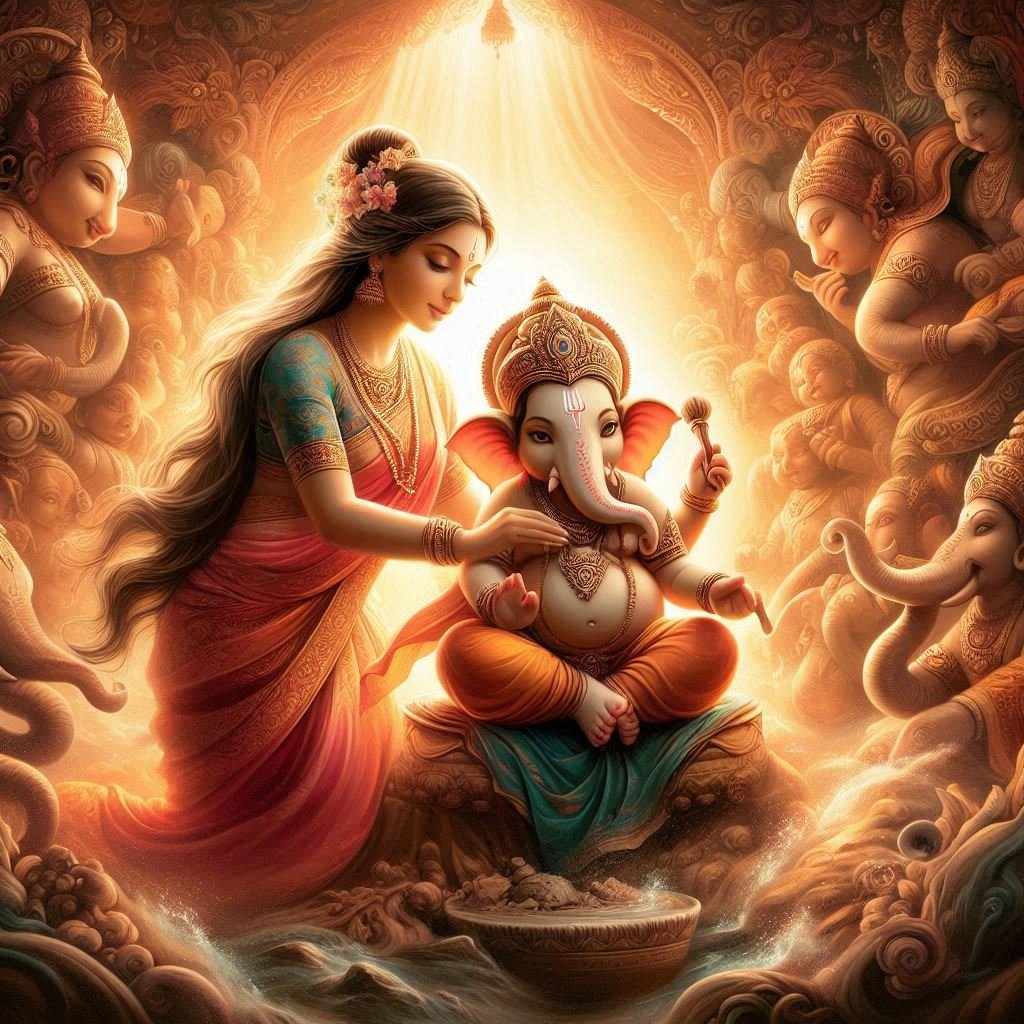
The festival marks Lord Ganesha‘s birthday, beloved son of Lord Shiva & Goddess Parvati. According to mythology, Parvati created Ganesha from turmeric paste to guard her privacy, giving him a special place in Hindu tradition.
The Festival’s Timing
Vinayaka Chavithi happens on the fourth day (Chaturthi) of the bright half of the Hindu month Bhadrapada – usually August or September. It lines up with monsoon season, a time for growth and renewal, fitting perfectly with themes of new beginnings.
Preparations for Vinayaka Chavithi
In Telugu Culture People are Cleaning and Decorating Their Home On Vinayaka Chavithi
Telugu households bustle with activity as families clean their homes before Vinayaka Chavithi. This cleaning process is believed to invite positive energy and divine presence.
Shopping Essentials
Markets buzz with stalls selling Ganesha idols in different sizes & styles—plus fresh flowers, fruits, sweets for the pooja (worship ritual).
Creating Sacred Spaces
A special home area is prepped for installing the Ganesha idol—adorned with rangoli designs, banana leaves & mango leaves creating a sacred atmosphere.
The Ganesha Idol: Centerpiece of Celebration
Choosing the Right Idol
Choosing a Ganesha idol is significant for many families. Some people like to use traditional clay figures, while others choose eco-friendly options made from paper or natural clay that easily break down in water. Families often pick the idol’s size and design based on their customs and practices.
Prana Pratishta: Invoking Life into Idol
On Vinayaka Chaturthi day starts with Prana Pratishtha—a ritual invoking Lord Ganesha’s presence through chanting mantras bringing idol to life.
The Vinayaka Chavithi Pooja: A Detailed Look
Preparing for Pooja
Pooja begins early morning after family members take bath & wear clean clothes; area around idol is cleaned for ritual.
The Offerings (Naivedyam)
During the pooja, various offerings hold special significance. For instance, people include modak, Ganesha’s favorite, as well as fruits like pomegranate and coconut, and red flowers that he cherishes. Additionally, they use durva grass, and incense combined with lamps creates sacred vibes. Consequently, these elements collectively enhance the overall spiritual atmosphere.
The Pooja Ritual
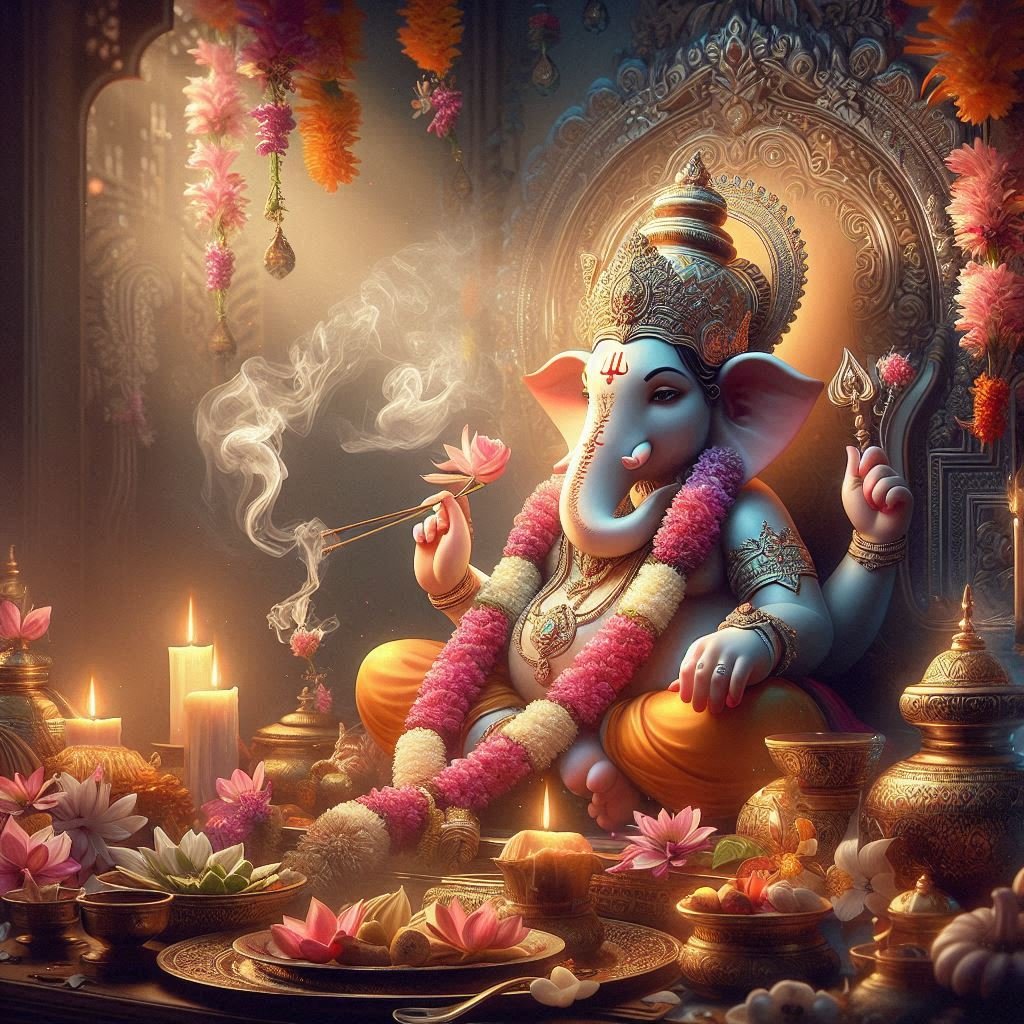
The pooja involves many steps:
Invocation of Lord Ganapathi through mantras
- Offering flowers (Pushpa Pooja)
- Lighting of lamps & incense
- Offering of food items (Naivedyam)
- Aarti, where a lit lamp is waved in front of the deity
- Distribution of prasad (blessed food) among family members
The Sign of 21 Modaks
In many Telugu households, it’s customary to offer 21 modaks to Lord Ganesha. The number 21 is thought to be auspicious. It represents the 21 forms of Ganesha mentioned in ancient texts. This tradition allows children to learn about their culture through hands-on participation.
Rituals and Ceremonies
Puja procedures and mantras:
The main puja (worship ritual) for Vinayaka Chavithi is quite detailed and follows certain steps:
- Avahana (invocation)
- Asana (offering a seat)
- Padya (washing the feet)
- Arghya (offering water)
- Achamaniya (sipping water)
- Snana (bathing the idol)
- Vastra (offering clothes)
- Yagnopavita (offering sacred thread)
- Gandha (applying sandal paste)
- Pushpa (offering flowers)
- Dhupa (offering incense)
- Deepa (offering light)
- Naivedya (offering food)
- Tambula (offering betel leaves and nuts)
- Dakshina (offering money)
- Arati (waving of lamps)
Various mantras are chanted throughout the puja, with the most common being the Ganesha Gayatri Mantra:
“Om Ekadantaya Vidmahe, Vakratundaya Dhimahi, Tanno Danti Prachodayat“
Offering special foods and prasadam:
Food offerings, or naivedyam, are a key part of the puja ritual.
Most notably, modak—Ganesha’s favorite sweet dumpling—is offered during this time.
In Telugu regions, it’s also known as kudumu or undrallu.
Other typical offerings include fruits like pomegranate & coconut, laddus, puffed rice (borugulu), jaggery, betel leaves & nuts.
Afterward, these offerings are given out as prasadam amongst family & friends.
Aarti and other devotional practices:
The puja wraps up with the aarti—a ritual where lamps are waved in circles before the deity while devotional songs are sung.
Commonly sung aartis at Telugu homes include “Jai Ganesh, Jai Jai Ganesh” & “Om Jai Jagadish Hare.”
Additionally, families sometimes hold bhajans or even invite professional singers for an evening of soulful music.
Festive Foods and Sweets
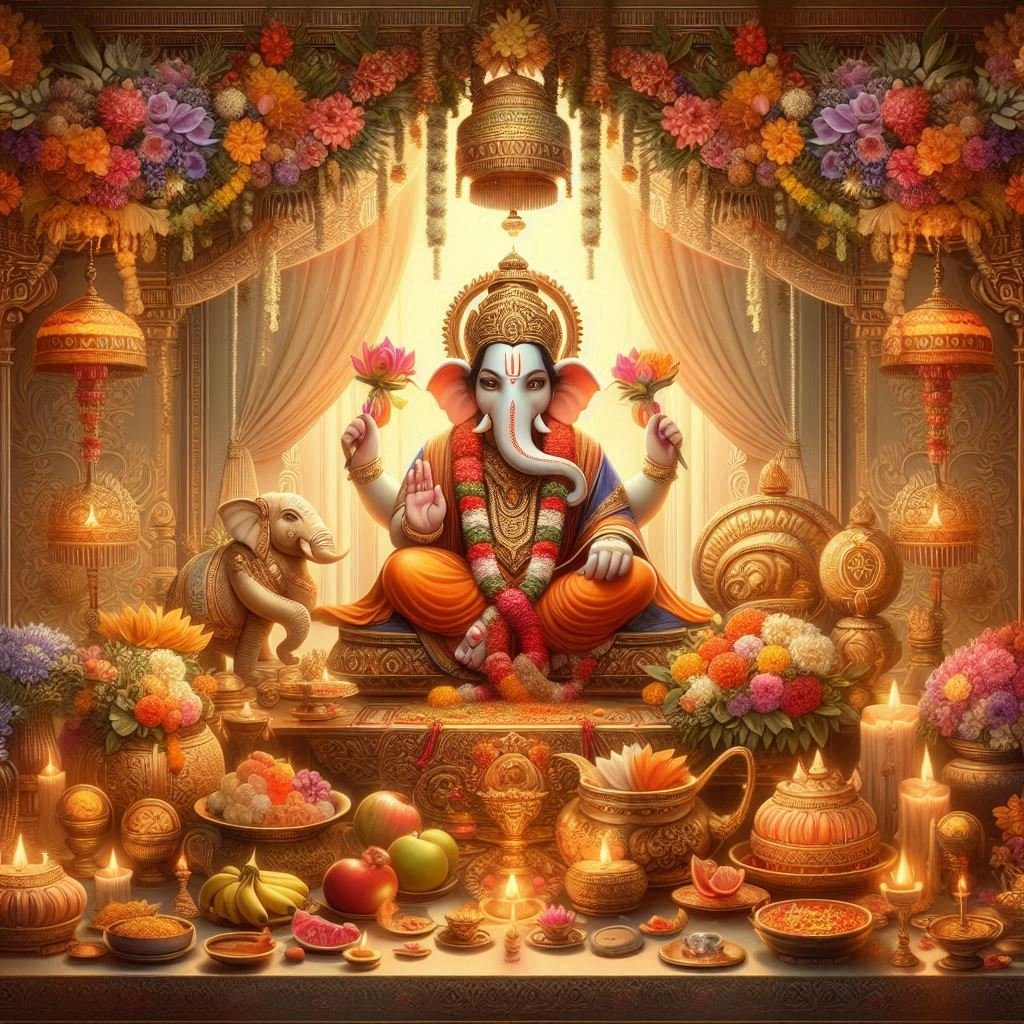
Traditional dishes prepared for Vinayaka Chavithi: In Telugu Culture
Vinayaka Chavithi can’t be complete without its delicious foods!
Some popular eats are pulihora (tamarind rice), vada (savory lentil fritters), payasam (sweet milk pudding), kobbari kudumulu (steamed coconut dumplings), chekkalu (rice crackers), and boorelu (sweet lentil balls).
Cooking these dishes? It’s often a family thing—I’ve fond memories helping my aunt shape kudumulu!
Significance of modak:
Modaks have special meaning at Vinayaka Chavithi—they symbolize human shape with sweet filling being the soul inside it.
Laddus & payasam hold importance too; laddus stand for concentrated knowledge while payasam represents divine sweetness.
Regional variations in cuisine reflect diverse heritage across Telugu-speaking areas:
In coastal Andhra—seafood might feature in celebrations while Rayalaseema region prefers spicier versions—and Telangana has unique sweets like Sarvapindi & Ariselu.
Unique Telugu Traditions in Vinayaka Chavithi Celebration
Undrallu:
Although modaks are popular throughout India, Telugu tradition features a similar sweet called undrallu or kudumulu. These rice flour dumplings, which are made with a jaggery-coconut mix, are steamed to perfection.
Ganesha Nama Sankeertana:
Singing bhajans dedicated solely to invoking Lord Ganesha is another popular practice here. This activity not only pleases the deity but also ensures that blessings shower over the household.
Community Celebrations
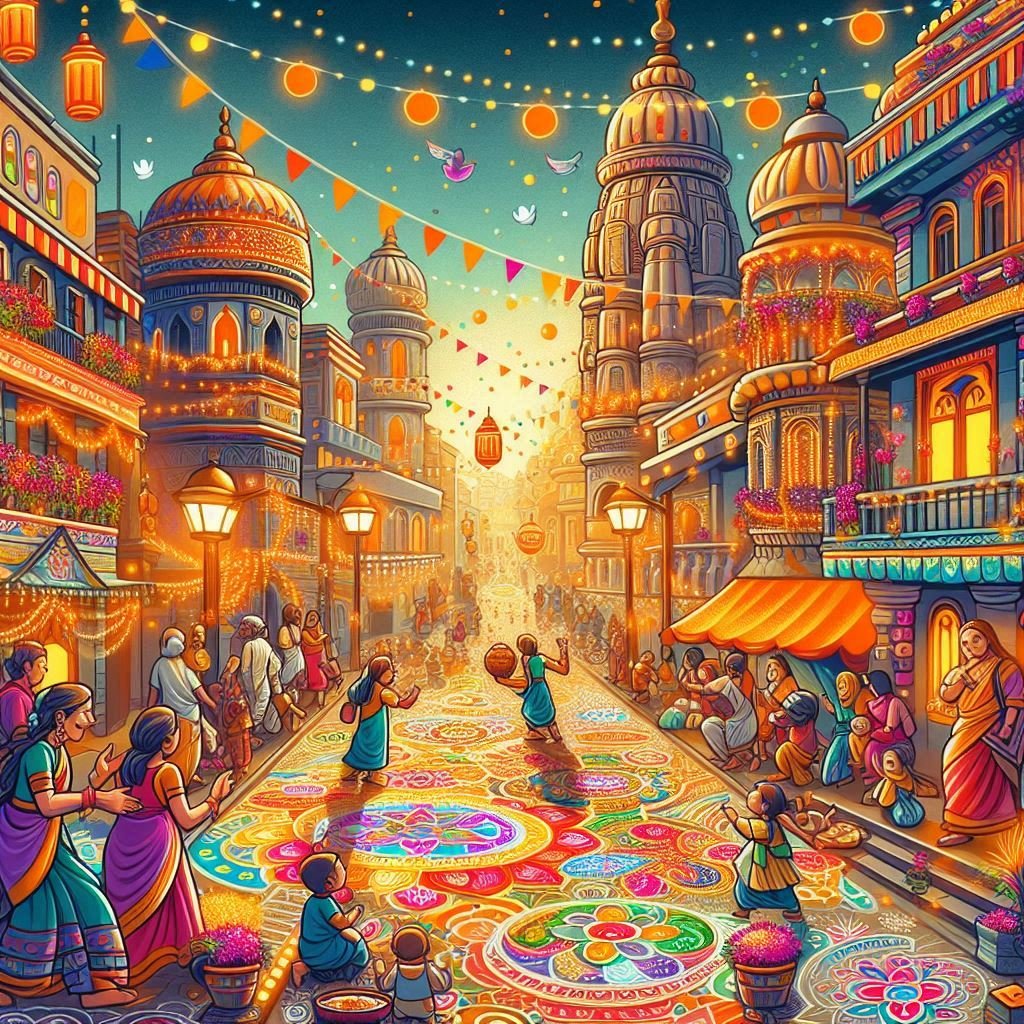
Apart from home celebrations, Telugu communities also organize large-scale public festivities. For example, they install huge idols and host cultural programs such as music, Singing competetion and dance performances. These events often continue for several days, creating a vibrant and extended celebration.
The Nine-Day Celebration
In Telugu Culture, Daily rituals extend up celebrating for nine days for Vinayaka Chavithi—not just one day:
Fresh offerings every day—recitation of mantras alongside special prayers continue routines creating deeper connection…
Themed Days assigning specific aspects focus different forms Ganesha’s personality! Adding variety into extended celebration…
On the final day, people move the idols from their temporary shrines, where they have been receiving prayers and offerings, to nearby water sources such as rivers, ponds, lakes, or beaches for immersion. Before the immersion, they hold a joyful and devoted final procession throughout the streets or area, celebrating Lord Ganesha with happiness and enthusiasm.
The Cultural Impact of Telugu Culture for Vinayaka Chavithi
Vinayaka Chavithi fosters community spirit bringing neighbors together sharing sweets visiting each other’s homes joining community celebrations!! Tradition encourages arts crafts providing local artisans opportunities getting creative trying eco-friendly materials showcasing wonders natural art forms merging religion joyously embellished styles impacting society positively generations sustaining harmony grounded warmth love compassion foundations established something beyond wildest dreams ever thought existed masterpiece universe!!!
Environmental Considerations in Modern Celebrations
The Shift Towards Eco-Friendly Practices
The Shift Towards Eco-Friendly Practices
In recent years, there’s been a big buzz about the environmental impact of dropping painted plaster of Paris idols into water bodies. Many Telugu families now go for eco-friendly Ganesha idols. These are made from natural clay, paper, or even seeds that can grow into plants when put in water.
Community Initiatives
Several community groups in Telugu-speaking areas have started promoting greener celebrations. They set up artificial tanks for immersions and have awareness campaigns to stress the need for eco-friendly festivities.
Vinayaka Chavithi Beyond Borders
Global Celebrations
With Telugus spread all over the globe, Vinayaka Chavithi has truly gone international. In places like the United States, the United Kingdom, and Australia, Telugu communities organize events that not only celebrate their faith but also showcase their culture to a broader audience. Consequently, these gatherings highlight their rich traditions and bring their cultural heritage to the forefront.
Cultural Exchange
These global events often turn into platforms for cultural sharing, letting non-Indians dive into the rich traditions of Vinayaka Chavithi, and promoting cross-cultural understanding.
The Spiritual Essence of Vinayaka Chavithi
Inner Significance
Although the outside celebrations are lively and fun, the festival also carries a deep spiritual meaning. Thus, it offers a blend of both joyous festivities and profound spiritual significance. It’s a time for self-thought, clearing inner obstacles, and seeking divine blessings for fresh starts.
Lessons from Ganesha
Ganesha’s different features give us valuable life lessons:
Wisdom & discernment (big head)
Listening more than talking (big ears, small mouth)
Adaptability (the trunk)
Enjoying life’s sweetness while staying grounded (love for modaks, big belly)
Environmental Considerations
Eco-friendly Ganesha Idols
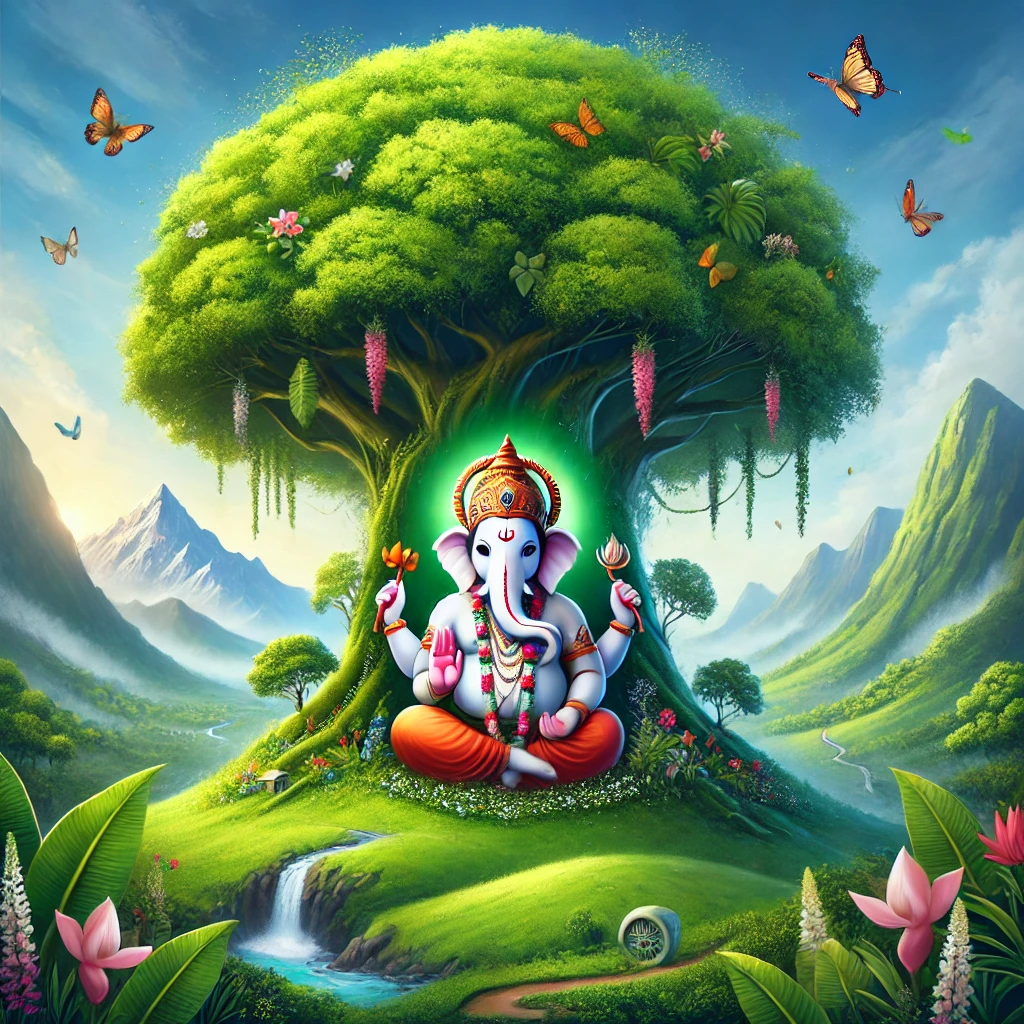
There’s a lot more talk lately about how painted plaster of Paris idols mess up water bodies. Many Telugu groups now choose eco-friendly options:
Clay idols that dissolve easily in water
Idols made from natural stuff like cow dung or paper pulp
Plant seed idols that can be planted after the festival
I’ve even seen some cool ones made from chocolate or ice; they melt away without hurting nature.
Sustainable Celebration Practices
Apart from eco-friendly idols, folks are adopting other green habits:
Using natural colors for rangolis and decorations
Picking reusable or biodegradable plates and cups for community meals
Using cloth bags when shopping for the festival
Organizing clean-up drives after immersion ceremonies
Conclusion: The Enduring Appeal of Vinayaka Chavithi
Vinayaka Chavithi in Telugu culture isn’t just another festival. about beliefs, traditions &ness. You set up a home shrine, you joyfully immerse the idol. Every step shows how dedicated and culturally rich the Telugu people are.
This festival mixes religious practices with social fun, traditional arts with modern eco-friendly stuff, & local customs with big global celebrations. Families come together, communities bond, and folks get back to their roots.
Whether you’re a big follower of Lord Ganesha or just curious about Indian customs, Vinayaka Chavithi offers a great chance to feel the warmth and spirit of Telugu traditions.
As the festival changes to fit modern times but keeps its core values, it shows how faith and tradition can bring people together and add meaning to their lives.
So, when you hear “Ganapati Bappa Morya” chants or see those colorful Ganesha statues, remember—it’s more than a religious event. You’re seeing a rich cultural tradition that goes beyond faith. It celebrates life and wisdom while constantly overcoming challenges and embracing new beginnings.
It’s about beliefs & traditions. You set up a home shrine. You joyfully immerse the idol. This festival mixes practices with fun (traditional arts with eco-friendly stuff). Celebration is big. Telugu people are dedicated.
Communities bond; folks get back to roots. Families come together. Whether you follow Lord Ganesha or just curious about Indian customs—this festival offers warmth & spirit of Telugu traditions!
As times change but core values remain, it shows us how faith brings people together. At the same time! It adds meaning to their lives too.
When you hear “Ganapati Bappa Morya” chants or see colorful Ganesha statues—remember—it’s more than religion—it’s culture beyond belief! Life is celebrated wisely while facing challenges as well as embracing new beginnings.
FAQs
When is Vinayaka Chavithi celebrated?
It falls on the fourth day of the bright half in the Hindu month of Bhadrapada (usually August or September).
How long does it last?
The main day is just one day but festivities can stretch from 1 to 21 days depending on local traditions.
What’s special about 21 types of leaves used in puja?
They represent 21 forms of Goddess Parvati, Ganesha’s mother.
Why immerse Ganesha at the end?
Immersion signifies Ganesha returning to his heavenly home taking devotees’ misfortunes away.
Are there special customs for newlyweds?
Yes! Newly married couples often celebrate their first Vinayaka Chavithi with lots of enthusiasm inviting family & friends over for puja and feast.

Good