
1. US Senator Threatens India Over Russian Oil: A Wake-Up Call, Not a Worry
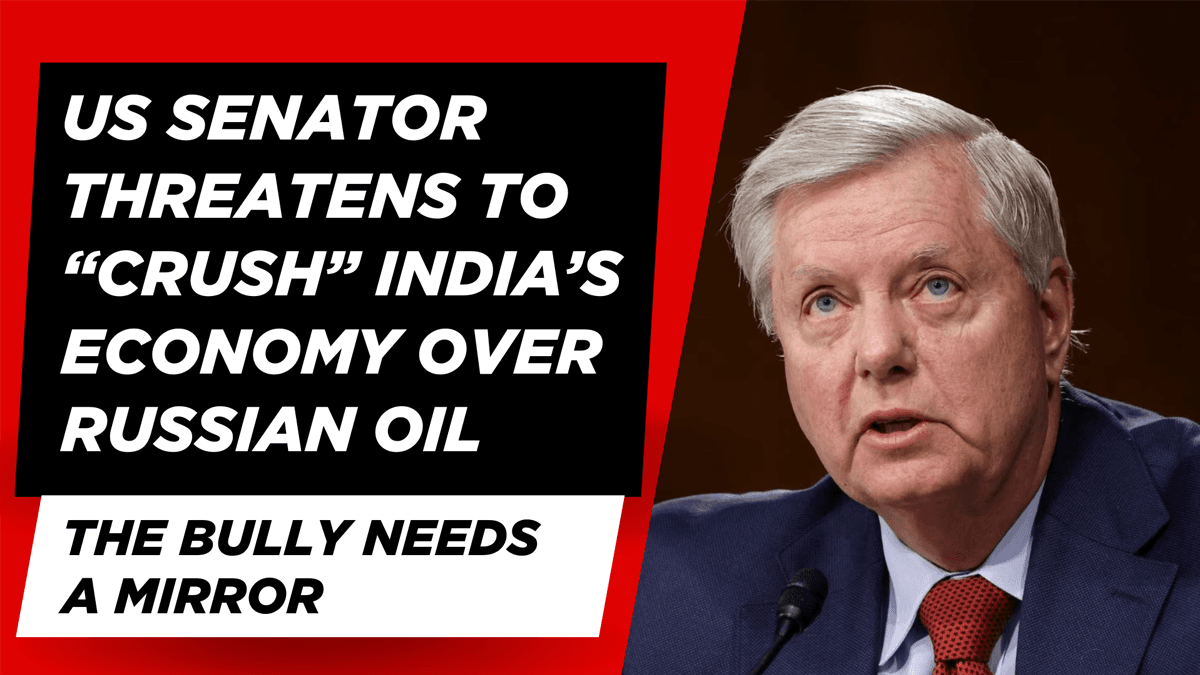
“Crush India’s economy. Tear the hell out of them.”
Strong words—unbecoming of a US lawmaker addressing a strategic partner. But that’s precisely what Republican Senator Lindsey Graham, a close Trump ally, just said. And make no mistake, his target wasn’t an adversary—it was India.
2. The Threat: “Blood Money” and 100% Tariffs
In a vitriolic statement that’s gone viral, Senator Graham slammed India, China, and Brazil for purchasing discounted Russian oil. Labeling these purchases as “blood money”, Graham accused the trio of funding Russia’s war machine.
“If you keep buying cheap Russian oil… we are going to tear the hell out of you and crush your economy.”
He didn’t stop at rhetoric. The senator backed a bill that proposes secondary tariffs up to 500% on nations buying from Russia—except, of course, America’s “friends” in Europe.
3. What Are Secondary Sanctions?
Let’s break it down.
A direct sanction targets the enemy—in this case, Russia.
A secondary sanction targets anyone dealing with the enemy—meaning India, China, Brazil, and others importing Russian crude.
Yet, here’s the double standard.
Europe continues to buy Russian gas and remains untouched—because they send weapons to Ukraine. The message is clear: arm Ukraine, and you’re immune. Trade without towing the American line, and you’ll be punished.
4. India Responds: “We Feel No Pressure”
India isn’t blinking. Petroleum Minister Hardeep Singh Puri was crystal clear in his response:
“I don’t feel any pressure in my mind. And I don’t think my boss’s mind is wired to feel any pressure.”
He highlighted how India has diversified its oil sources—from 27 countries to over 40—ensuring resilience and flexibility. India currently imports around 30% of its crude from Russia, and will continue to prioritize strategic autonomy over foreign diktats.
5. Trump and India: Time for a Reality Check
Many in India still see Donald Trump as a “friend”. That perception needs serious revisiting.
Since returning to the spotlight, Trump has:
Backed 100% tariffs on India
Supported a senator who wants to “crush” us
Hosted Pakistan’s military chief
Repeatedly hyphenated India and Pakistan
Claimed credit for Indo-Pak ceasefires
Watched his allies sign crypto deals with Pakistan
Is this friendship—or political opportunism wrapped in false praise?
India should be wary of buying into the myth of the US as a “natural ally”. Washington is transactional, not sentimental. Whether it’s Clinton slapping sanctions after Pokhran, Obama sermonizing on religious freedom, or Biden stonewalling over visas and CAATSA, India has seen this pattern before.
6. The Bigger Picture: American Exceptionalism at Work
Senator Graham’s rant isn’t an isolated outburst. It reflects a broader American worldview—one where:
They set the rules
They dictate who trades with whom
And they retaliate against those who don’t comply
Buy Russian oil? Get punished.
Don’t support Ukraine militarily? Get sanctioned.
Maintain a trade surplus with the US? Get tariffed.
Share a border with China? Well, maybe become a US protectorate while you’re at it.
This isn’t diplomacy. This is economic bullying—a strategy to maintain unipolar dominance in a world that’s rapidly turning multipolar.
7. India’s Message: Keep Your Threats
India is not Canada, not Greenland. We are a sovereign civilizational state with a long memory and a longer spine. Since the Ukraine war began, New Delhi has:
Held its ground on Russian oil
Refused to toe NATO’s line
Engaged all sides—including Russia, the US, Iran, Israel, and China
Our foreign policy is guided by strategic interests, not Western tantrums.
8. Final Word: The Bully Needs a Mirror
Washington needs to re-examine its tone, especially toward allies. Threats don’t forge partnerships. Respect does.
India’s rising global stature isn’t up for debate. If the US wants meaningful ties with New Delhi, it must speak as an equal—not as a school principal wagging fingers at the backbenchers.
Otherwise, as history shows, India knows how to walk alone.