

Table of Contents
1. The Seismic Shift in India-Bangladesh Relations You Can’t Afford to Ignore
In a dramatic turn of India-Bangladesh Relations in 2025, Bangladesh’s political landscape has been completely transformed with the ousting of Prime Minister Sheikh Hasina—and the ripple effects on India-Bangladesh relations are nothing short of extraordinary. For decades, these neighboring nations have built a relationship worth $13 billion in annual trade, with Bangladesh standing as India’s largest trading partner in the subcontinent. But beneath this thriving partnership lies a complex web of geopolitical tensions, infrastructure projects, and strategic interests now hanging in the balance. 💥
As Muhammad Yunus steps in as Bangladesh’s interim leader, India faces an unprecedented diplomatic challenge. With $8 billion in infrastructure investments at stake, critical rail links that have slashed travel times from 31 hours to just 10, and China eagerly waiting in the wings to expand its influence, the transformation is both alarming and fascinating. From historical ties dating back to the 1947 partition to modern security cooperation and trade agreements, the relationship between these South Asian neighbors is entering uncharted territory. Join us as we explore the 10 shocking ways this relationship is changing—and why development might leave you completely speechless.
2. Historical Context of India-Bangladesh Relations
a. Development of diplomatic ties since Bangladesh’s independence
The birth of Bangladesh in 1971 wasn’t just another country gaining independence—it was a seismic shift in South Asian politics. India played a pivotal role in this birth, providing military support and sheltering nearly 10 million refugees during the liberation war. When Bangladesh emerged as a sovereign nation on December 16, 1971, India was the first country to recognize it.
But the honeymoon didn’t last long. The assassination of Sheikh Mujibur Rahman in 1975 sent bilateral relations into a tailspin. Military regimes that followed in Bangladesh often viewed India with suspicion, creating a frosty diplomatic environment that lasted for years.
The 1990s brought a breath of fresh air. Democratic transitions in Bangladesh opened new avenues for cooperation. The 1996 Ganges Water Treaty marked a watershed moment, addressing one of the most contentious issues between the two nations—water sharing. Trade agreements followed, with India granting duty-free access to several Bangladeshi products.
The 2000s witnessed infrastructure becoming the backbone of this relationship. The revival of rail links, development of ports, and enhancement of road connectivity transformed how both countries interacted. Remember when traveling between certain parts of these neighboring countries was a logistical nightmare? Those days slowly began fading away.
b. Sheikh Hasina’s role in strengthening bilateral relations
When Sheikh Hasina returned to power in 2009, India-Bangladesh relations entered their golden era. Unlike previous leaders who played the China card against India, Hasina recognized the strategic importance of solid ties with her western neighbor.
Security cooperation became the cornerstone of this relationship. Bangladesh cracked down on anti-India insurgent groups operating from its territory—a move that dramatically changed India’s security landscape in its northeastern states. Remember those regular bombings and attacks in Assam and Tripura? They practically disappeared overnight.
The 2015 Land Boundary Agreement was nothing short of historic. After decades of living as stateless people, residents of 162 enclaves finally received citizenship of either India or Bangladesh. Imagine waking up one morning and suddenly belonging to a country!
Economic ties flourished under Hasina’s watch. Bilateral trade skyrocketed from $2.7 billion in 2008 to over $15 billion by 2023. India became Bangladesh’s largest trading partner in South Asia, while Bangladesh emerged as India’s biggest trade partner in the region.
Connectivity projects reached unprecedented levels. The revival of pre-1965 rail links, inauguration of the Maitri Setu bridge, and opening of new border haats (markets) transformed cross-border movement and trade.
c. Recent political tensions leading to Hasina’s ouster
Nothing lasts forever in politics. Despite the apparent strength of India-Bangladesh relations, cracks began appearing beneath the surface.
Growing anti-India sentiment in Bangladesh became impossible to ignore. Many Bangladeshis felt their country was getting a raw deal in water-sharing arrangements, particularly regarding the Teesta River. India’s internal politics, especially debates over the Citizenship Amendment Act, fueled perceptions that India viewed Bangladeshis with disdain.
China’s growing footprint in Bangladesh added another layer of complexity. Beijing’s massive investments under the Belt and Road Initiative—totaling over $26 billion—gave Bangladesh leverage in its dealings with India. The balance was shifting, and everyone could feel it.
The final blow came in August 2024. After weeks of student-led protests against job quotas snowballed into nationwide demonstrations, Sheikh Hasina resigned and fled to India. Her 15-year rule ended abruptly, leaving India without its most reliable partner in Dhaka.
The aftermath has been chaotic. Reports of violence against minorities, particularly Hindus, have raised alarms in New Delhi. The diplomatic establishment that took years to build now faces its greatest test. As Bangladesh navigates this political transition, the future of India-Bangladesh relations hangs in the balance.
3. Temples Burn, Voices Muffled: The Hidden War on Hindus in Bangladesh
a. Recent Developments: A Resurgence of Violence
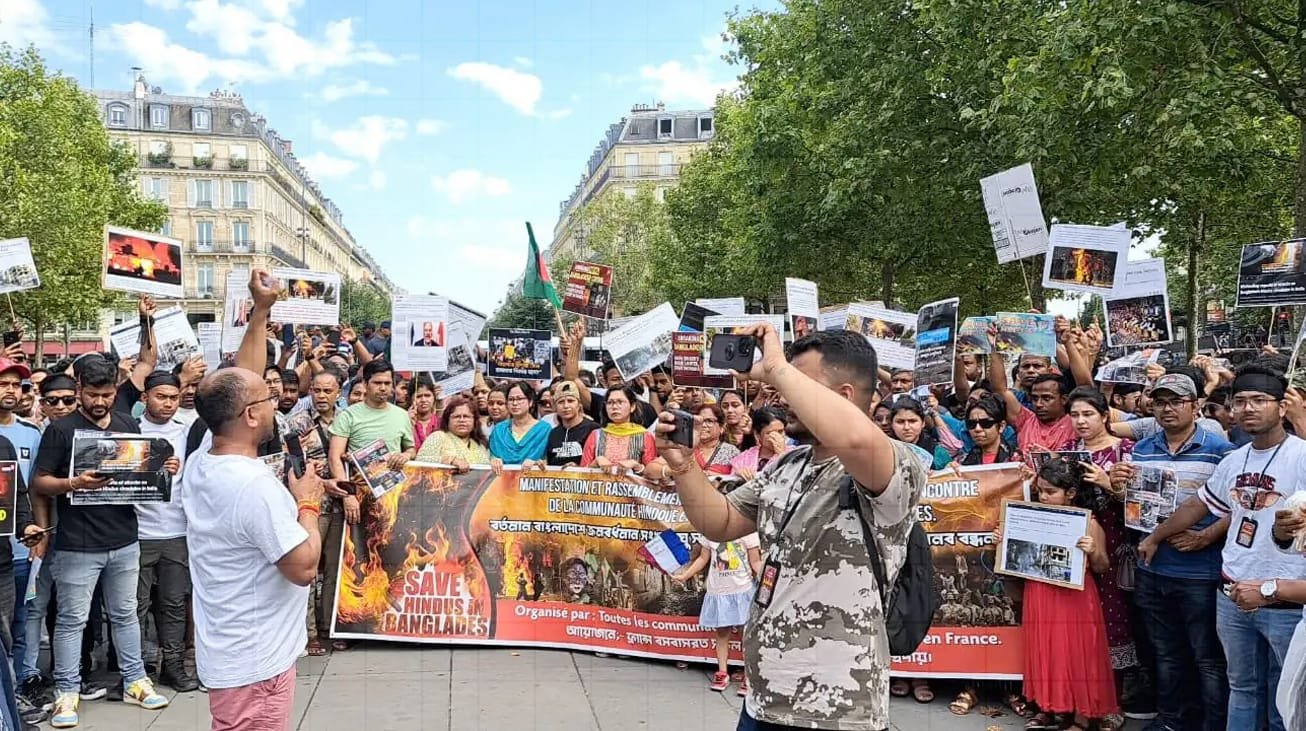
The political vacuum following Hasina’s departure has emboldened extremist elements, leading to a series of coordinated attacks against Hindus:
Widespread Attacks: Human rights organizations reported over 2,010 incidents of violence against Hindus between August 4 and August 20, 2024. These included attacks on 69 temples and the destruction of homes belonging to 157 families.
Targeted Killings: Prominent Hindu leaders, such as Bhabesh Chandra Roy, have been brutally murdered, highlighting a systematic approach to silencing minority voices. The Times of India
Sexual Violence and Abductions: Reports indicate numerous cases of Hindu women and girls being abducted, raped, and forcibly converted, aiming to terrorize and destabilize the community.
Destruction of Religious Sites: Iconic temples, including the Dhakeshwari National Temple in Dhaka, have been vandalized, symbolizing an attack on the cultural and religious identity of Hindus.
b. International and Domestic Reactions
The international community has expressed concern over the escalating violence:
India’s Stance: The Indian government has condemned the attacks, urging Bangladesh to ensure the safety of its Hindu minority. Business Standard
Global Silence: Despite these appeals, there has been a notable lack of substantial international intervention, leaving the Hindu community in Bangladesh feeling isolated and vulnerable.
4. Economic Dimensions of the Bilateral Relationship
a. Trade statistics: $13 billion bilateral trade in 2023-24
The economic relationship between India and Bangladesh has reached unprecedented heights, with bilateral trade hitting $13 billion in the 2023-24 fiscal year. This isn’t just some random number—it represents a staggering 58% increase from five years ago.
What’s really turning heads is how this growth happened despite global supply chain disruptions and pandemic setbacks. While most neighboring countries saw trade numbers plummet, India and Bangladesh somehow managed to strengthen their commercial bonds.
Look at the breakdown:
- Indian exports to Bangladesh: $9.8 billion
- Bangladeshi exports to India: $3.2 billion
Sure, there’s still a trade imbalance that tilts heavily in India’s favor. Bangladesh officials point this out at nearly every bilateral meeting, and honestly, they have a point. The trade deficit sits at around $6.6 billion—not exactly the picture of balanced partnership that both countries claim to want.
b. Key exports and imports between the nations
The goods flowing between these nations tell a fascinating story about their economic relationship:
What India sends to Bangladesh:
- Petroleum products (21% of total exports)
- Cotton and textile materials (18%)
- Machinery and equipment (14%)
- Vehicles and parts (11%)
- Pharmaceuticals (9%)
What Bangladesh sends to India:
- Ready-made garments (43% of total exports)
- Jute products (16%)
- Fish and seafood (12%)
- Agricultural products (10%)
- Leather goods (8%)
This isn’t just business—it’s survival. Bangladesh’s garment industry employs over 4 million people, while Indian petroleum exports help keep Bangladesh’s growing economy fueled.
c. Potential impact of the Free Trade Agreement negotiations
The FTA negotiations that started in 2021 could completely transform this relationship. Both countries have been dancing around this agreement for years, but recent geopolitical shifts have created new urgency.
If implemented, the agreement would slash tariffs on 96% of traded goods—a game-changer for both economies.
For Bangladesh, this could mean:
- Reduced tariff barriers for their garment exports
- Greater access to India’s 1.4 billion consumer market
- Potential reduction in the massive trade deficit
For India, the benefits look like:
- Strengthened economic foothold in a strategic neighbor
- Protection against China’s growing economic influence in Bangladesh
- New investment opportunities in Bangladesh’s special economic zones
d. Status of the $8 billion infrastructure development credits
The $8 billion credit line from India to Bangladesh represents one of the largest development packages India has offered to any country. But here’s where things get complicated.
Only about $3.5 billion has actually been utilized so far. The rest? Tangled in bureaucratic red tape, implementation delays, and political complications.
Key projects include:
- The Akhaura-Agartala rail link ($68 million) – 95% complete
- Khulna-Mongla rail line ($389 million) – 75% complete
- Rooppur Nuclear Power Plant infrastructure ($1.6 billion) – 60% complete
- Various power transmission projects ($1.2 billion) – Various stages
These infrastructure projects are more than just construction work—they’re physical manifestations of India’s “Neighborhood First” policy. But with political uncertainty in Bangladesh, the future of these massive investments hangs in a delicate balance.
5. Strategic Infrastructure Projects at Risk
a. Cross-border Rail Links and Their Significance
The railway connections between India and Bangladesh aren’t just tracks and trains – they’re lifelines. These cross-border links have transformed how goods and people move between the two nations. Before these connections, trade meant lengthy detours and nightmarish logistics.
Take the Maitree Express between Kolkata and Dhaka. It’s not just a train – it’s a symbol of friendship that carries over 500 passengers daily. Or look at the Bandhan Express connecting Khulna to Kolkata, which has cut travel time by nearly 40%.
But here’s the kicker – these rail links do more than move people. They’ve slashed transportation costs by up to 30% for businesses on both sides. Indian textiles heading to Bangladesh and Bangladeshi seafood coming to Indian markets now arrive faster and cheaper.
What’s at stake? Only about $1.5 billion in annual trade that flows directly through these rail corridors. With political tensions rising, these vital connections hang in the balance.
b. Access to Northeastern India through Bangladesh
Talk about a geographical nightmare – India’s Seven Sisters (northeastern states) are connected to the mainland by a tiny 22 km wide corridor called the Chicken’s Neck. This makes supplying these states expensive and complicated.
Bangladesh has been a game-changer here. The transit agreement allowing Indian goods to cross through Bangladesh territory has:
- Cut travel distance by nearly 70%
- Reduced transportation time from 10 days to just 3
- Lowered logistics costs by approximately 25%
Think about it. Before this arrangement, trucks from Kolkata to Agartala had to travel 1,600 km around Bangladesh. Now? Just 600 km straight through.
For everyday people in the Northeast, this means cheaper groceries, more reliable medical supplies, and faster delivery of basically everything. For businesses, it’s opened up entirely new markets.
c. Port Usage Agreements and Transit Corridors
Bangladesh’s strategic location makes its ports gold mines for Indian trade. The agreement allowing India to use Chittagong and Mongla ports has been revolutionary. Indian cargo ships no longer need to sail all the way around Bangladesh to reach the Northeast.
The numbers tell the story:
- 35% reduction in shipping costs
- 60% decrease in transit time
- Over $200 million in annual savings for Indian businesses
These transit corridors aren’t just convenient – they’re transforming entire economies in the region. Small towns along these routes have become bustling trade centers. Local businesses are booming as trucks and cargo need services, food, and accommodations.
d. Potential Disruptions to Ongoing Development Initiatives
The cracks are already showing. With political uncertainty looming, several major projects are hanging by a thread:
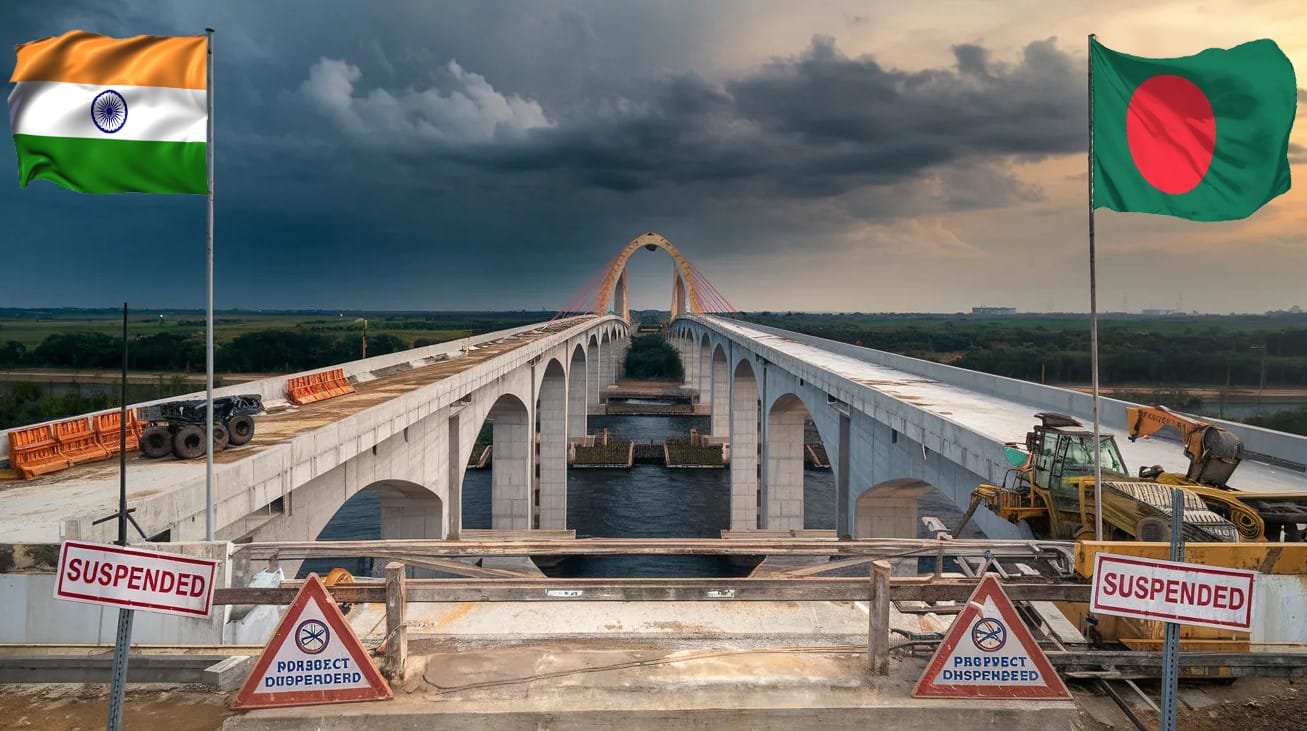
The $1.8 billion Akhaura-Agartala rail project is now stalled at 65% completion. The $4.5 billion joint river management initiative is facing mounting delays. And the ambitious Coastal Shipping Agreement that took years to negotiate? It’s implementation has ground to a halt.
Local contractors are already reporting payment delays. Engineering teams from both countries are stuck in limbo. And supplies for ongoing projects are piling up at border crossings.
6. Geopolitical Implications of the Power Transition
a. China’s growing influence in Bangladesh
The dragon has been quietly extending its claws into Bangladesh for years now. China has poured over $26 billion into Bangladesh through the Belt and Road Initiative, making it the country’s largest trading partner. But this isn’t just about business.
Since Sheikh Hasina’s departure, Beijing has been quick to establish connections with the interim government. They’re offering “no-strings-attached” development packages that look mighty tempting compared to India’s more complicated arrangements.
What’s really telling? Chinese Ambassador Yao Wen was among the first diplomats to meet with Muhammad Yunus after he took charge. That’s not just diplomatic courtesy – it’s a power move.
Chinese investments now cover everything from power plants to bridges, with the Padma Bridge standing as their crowning achievement. And let’s not kid ourselves – these aren’t random projects. They’re strategically positioned to maximize influence in a country that India once considered firmly in its sphere.
b. India’s strategic concerns with the interim government
India’s getting nervous, and honestly, they have reason to be. After years of cozying up to Hasina’s government, New Delhi now faces a leadership in Dhaka that might not prioritize Indian interests.
The biggest worry for India isn’t just losing influence – it’s what happens to those anti-India militant groups that Hasina kept in check. Intelligence reports suggest some of these outfits are already planning to reestablish bases near the India-Bangladesh border.
Another headache? The $8 billion worth of development projects India has invested in Bangladesh. With government transitions often comes contract reviews, and New Delhi is sweating over whether these projects will continue as planned.
The interim government’s potential tilt toward China has Indian security experts working overtime. Every diplomatic meeting between Dhaka and Beijing is being analyzed to death in New Delhi’s corridors of power.
c. Regional security challenges in South Asia
The power shift in Bangladesh has created security ripples throughout South Asia. Nobody’s feeling the waves more than the smaller countries caught between India and China’s tug-of-war.
Nepal and Bhutan are watching closely. If Bangladesh successfully balances relations between the giants, it could provide a blueprint for their own diplomatic juggling acts.
Terrorism remains the wild card. With intelligence sharing between India and Bangladesh potentially on shakier ground, regional counter-terrorism efforts could suffer. ISIS and Al-Qaeda affiliated groups have historically used political instability as an opportunity to strengthen their footholds.
The Rohingya crisis adds another layer of complexity. Over a million refugees in Bangladesh represent a humanitarian challenge that affects regional stability. Any policy shifts under the new government could have dramatic consequences for these vulnerable populations.
d. Balancing act between competing powers
Bangladesh’s interim government is performing a high-wire act that would make circus performers nervous. They need Chinese investment without becoming dependent. They need Indian goodwill without surrendering autonomy.
Muhammad Yunus has been masterful so far, reassuring India while opening doors to China, the US, and other players. His “friendship to all, malice toward none” approach sounds nice in theory, but putting it into practice is the real challenge.
The US has entered the game too, seeing an opportunity to counter Chinese influence. American diplomats have been unusually active in Dhaka, offering economic partnerships and security cooperation.
What’s fascinating is how Bangladesh’s relative importance has skyrocketed. A country once dismissed as a perpetual basket case is now the prize in a geopolitical chess match. The interim government knows this and is leveraging it to secure the best possible deals for Bangladesh’s development.
7. Emerging Challenges in the Post-Hasina Era
a. Concerns about Hindu minority safety in Bangladesh
The political whiplash in Bangladesh has thrown Hindu communities into a state of absolute uncertainty. With Hasina’s departure, the safety net that somewhat protected religious minorities has unraveled practically overnight.
Reports of temple vandalism started pouring in within hours of the power vacuum. Not days. Hours.
Hindu families are selling properties at rock-bottom prices just to escape. Many have already crossed into India’s West Bengal and Tripura, carrying only what they could grab in their rush to leave.
Why does this matter to India-Bangladesh relations? Because India can’t ignore 8% of Bangladesh’s population living in fear. And every Hindu refugee crossing the border becomes both a humanitarian concern and a diplomatic headache.
The numbers tell the ugly truth. Over 200 Hindu temples reportedly damaged in the first week after Hasina fled. Nearly 500 Hindu-owned businesses looted or burned. This isn’t random violence – it’s targeted.
b. Rising anti-India sentiment among Bangladeshi citizens
The anti-India feelings in Bangladesh aren’t new, but they’re hitting fever pitch now.
Scroll through Bangladeshi social media for five minutes. You’ll see India portrayed as the puppet master who kept Hasina in power against people’s wishes. Truth or perception? Doesn’t matter – it’s what many Bangladeshis believe.
“India’s backyard” – that phrase makes Bangladeshis’ blood boil. Nobody wants to be considered someone else’s yard, back or front.
Remember those massive infrastructure projects India launched in Bangladesh? Many locals now view them as colonial-style control mechanisms rather than development partnerships.
Even Bangladesh’s youth – once relatively neutral – are increasingly voicing anti-India sentiments. University campuses that were debating economic policies a year ago now host rallies questioning every aspect of the India-Bangladesh relationship.
c. Potential resurgence of the Bangladesh Nationalist Party
The BNP is dusting off its playbook and stepping back into the spotlight after years in political wilderness.
Their anti-India stance isn’t subtle. It’s their brand. Their historical alliance with Jamaat-e-Islami only complicates India’s diplomatic calculations.
The BNP remembers its treatment during the Hasina years – the arrests, the marginalization, the exile of leadership. And revenge politics rarely makes for stable foreign relations.
If they secure power in eventual elections, expect immediate policy reversals on India-friendly initiatives. Transit agreements? Security cooperation? Intelligence sharing? All suddenly on shaky ground.
d. Islamist groups and their influence on future governance
Hard-line Islamist groups are flexing their muscles in Bangladesh’s chaos, sensing opportunity in the power vacuum.
They’ve long criticized India as a Hindu-majority threat to Bangladesh’s Islamic identity. Now they have a receptive audience.
Organizations like Hefazat-e-Islam aren’t just religious movements – they’re political forces with the ability to mobilize millions. Their leaders are already positioning themselves as kingmakers in whatever government emerges.
The more influence they gain, the tougher India’s diplomatic position becomes. Every India-Bangladesh agreement gets scrutinized through an Islamist lens that’s inherently suspicious of Indian motives.
8. Navigating the New Diplomatic Reality
d
a. India’s cautious approach to the interim government
Talk about a diplomatic tightrope. India’s been walking one since Bangladesh’s student-led protests toppled Sheikh Hasina’s government.
After years of cozying up to Hasina, New Delhi now finds itself in uncharted waters. They’re dealing with a completely different political landscape – one they didn’t see coming.
Indian officials have been notably reserved in their public statements. Behind closed doors, though? They’re scrambling to establish communication channels with Muhammad Yunus’s interim government.
What’s particularly interesting is how India’s tone has shifted. Gone are the days of bold declarations about Bangladesh policy. Now it’s all measured statements and careful phrasing. Foreign ministry briefings have become exercises in diplomatic subtlety.
The stakes couldn’t be higher. India shares a 4,096-kilometer border with Bangladesh. Security concerns, trade relationships, and regional stability all hang in the balance.
b. Muhammad Yunus’s signals for bilateral engagement
The Nobel laureate turned interim leader hasn’t wasted time sending signals to New Delhi.
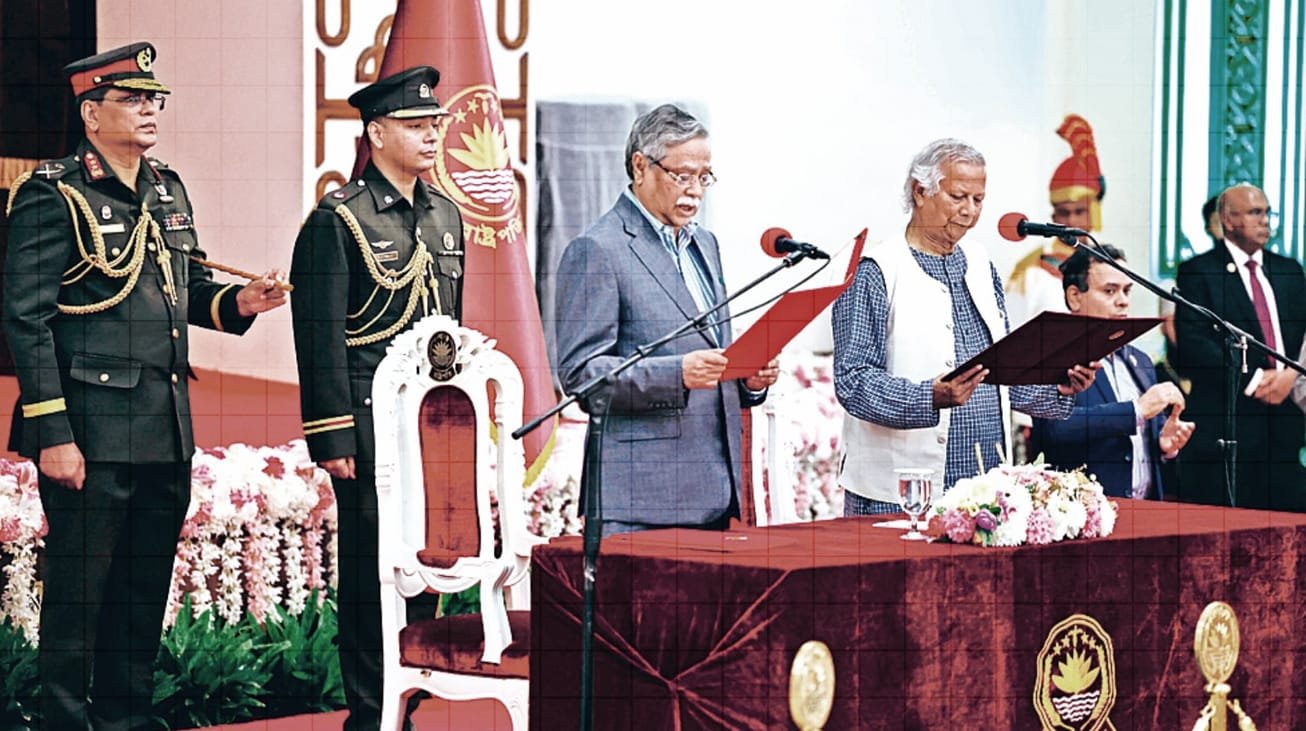
Yunus’s first week in office included a telling phone call with India’s Prime Minister. The message was clear: Bangladesh values its relationship with India, but the terms are being renegotiated.
What’s fascinating is Yunus’s dual approach. He’s reassuring India on security concerns while simultaneously signaling a more balanced foreign policy that won’t favor any single regional power.
In his own words during a recent press conference: “We seek friendship with all nations, especially our neighbors. But these relationships must respect our sovereignty and national interests.”
This isn’t just diplomatic speak. Yunus has already started reviewing major infrastructure projects involving Indian companies. Not canceling them – reviewing them. The distinction matters.
c. Pragmatic strategies for maintaining economic ties
Money talks, even during political upheavals.
Despite the diplomatic uncertainty, trade between India and Bangladesh continues to flow. The $15 billion bilateral trade relationship is too important for both countries to disrupt.
Indian businesses with investments in Bangladesh are adopting a wait-and-see approach. They’re continuing operations while quietly preparing contingency plans.
Both governments recognize that economic ties can be a stabilizing force during political transitions. That’s why they’ve kept border trade posts operating and maintained essential supply chains.
Smart move, considering how integrated these economies have become. Bangladesh relies on Indian imports for essential goods, while India benefits from Bangladesh’s growing consumer market.
d. Recalibrating India’s regional influence amid changing dynamics
The geopolitical chessboard in South Asia just got reshuffled.
India’s strategy of maintaining regional dominance through close ties with friendly governments now needs serious rethinking. The fall of Hasina demonstrated how quickly the ground can shift.
Chinese diplomats have already met with Yunus’s team. Pakistan has extended warm congratulations. The diplomatic competition for influence in Dhaka has intensified overnight.
What’s India’s counter-move? They’re emphasizing people-to-people connections and cultural ties that transcend governmental changes. Smart strategy.
They’re also highlighting geographic reality – Bangladesh and India will always be neighbors, while other powers are distant players with limited skin in the game.
The coming months will be crucial. Will India adapt its approach to accommodate Bangladesh’s new political reality? Or will it cling to old playbooks that no longer apply?
The answer will shape South Asian politics for years to come.
9. Conclusion
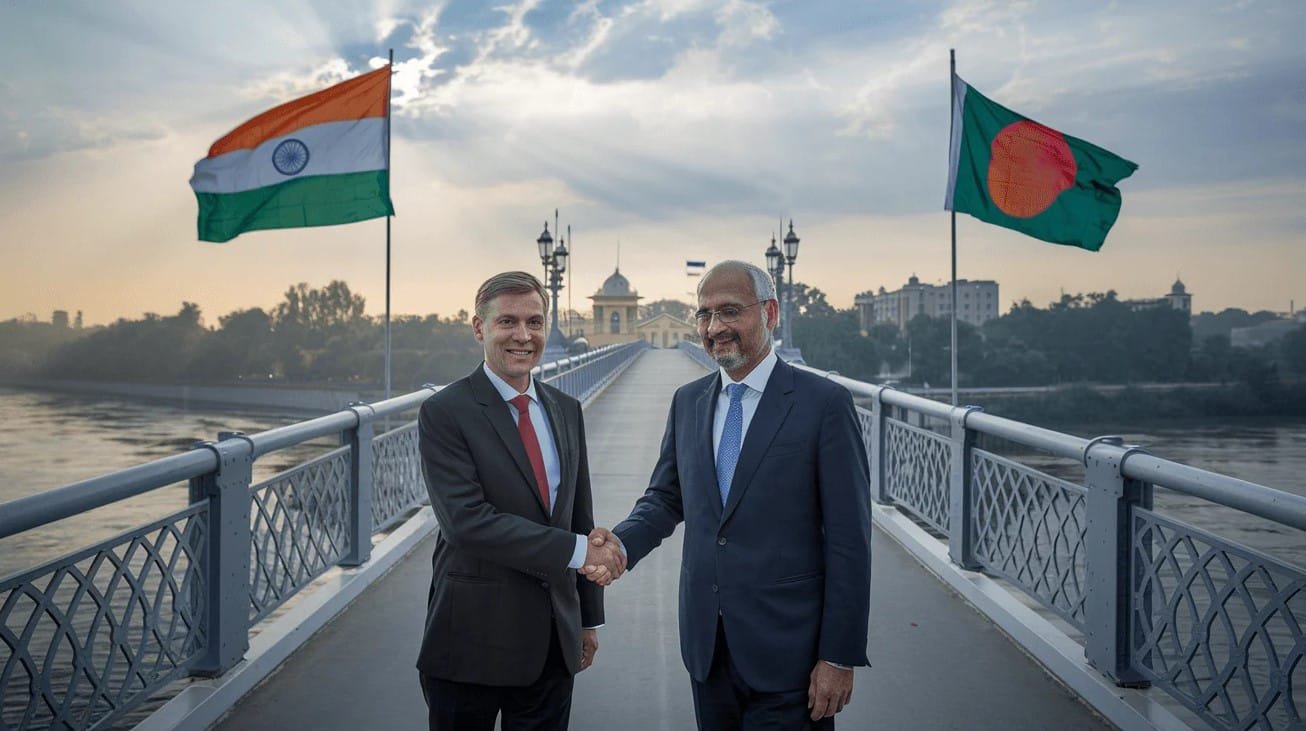
The India-Bangladesh relationship stands at a critical crossroads as the post-Hasina era unfolds. From historical ties and economic interdependence worth $13 billion in bilateral trade to strategically vital infrastructure projects like the Akhaura-Agartala rail link, the stakes couldn’t be higher. The political transition has created diplomatic challenges that threaten to reshape regional power dynamics, especially as China continues to expand its influence throughout South Asia.
As both nations navigate this uncertain landscape, pragmatic engagement will be essential to preserve decades of progress. The future of proposed initiatives like the Free Trade Agreement and ongoing infrastructure development will depend on how effectively the new leadership in Bangladesh balances regional relationships. Whatever path emerges, one thing remains clear – the evolution of India-Bangladesh relations will significantly impact regional stability, economic prosperity, and geopolitical alignments in ways that will reverberate far beyond their shared 4,096-kilometer border.
10. FAQs:
2. What role is China playing in Bangladesh now?
China is rapidly increasing influence through infrastructure investments and diplomatic ties with the interim government.
3. Why are Hindus being targeted in Bangladesh?
Political instability post-Hasina has led to a rise in anti-Hindu violence, with attacks on temples, homes, and communities.
4. What’s the trade balance between India and Bangladesh?
In FY 2023–24, bilateral trade reached $13B. India exports nearly $10B, creating a $6.6B trade deficit for Bangladesh.
5. What is the status of India-funded infrastructure in Bangladesh?
Out of $8B credit, only $3.5B has been utilized. Many projects now face delays amid political uncertainty.
6. How do cross-border rail and port agreements benefit India?
They cut transit time and cost, especially for Northeast India, supporting trade and regional integration.
7. What’s India’s diplomatic response to the new interim government?
India is cautiously engaging, emphasizing stability, economic ties, and mutual respect amid shifting alliances.
8. Could anti-India political forces gain power in Bangladesh?
Yes. BNP and Islamist groups, both less India-friendly, are rising and could reshape bilateral policies.
9. How might the Free Trade Agreement (FTA) help Bangladesh?
It could reduce tariffs on 96% of goods, boosting Bangladesh’s exports and addressing the trade deficit.
10. What’s the long-term outlook for India-Bangladesh relations?
Uncertain. Stability depends on managing strategic, economic, and communal tensions while countering China’s rise.