
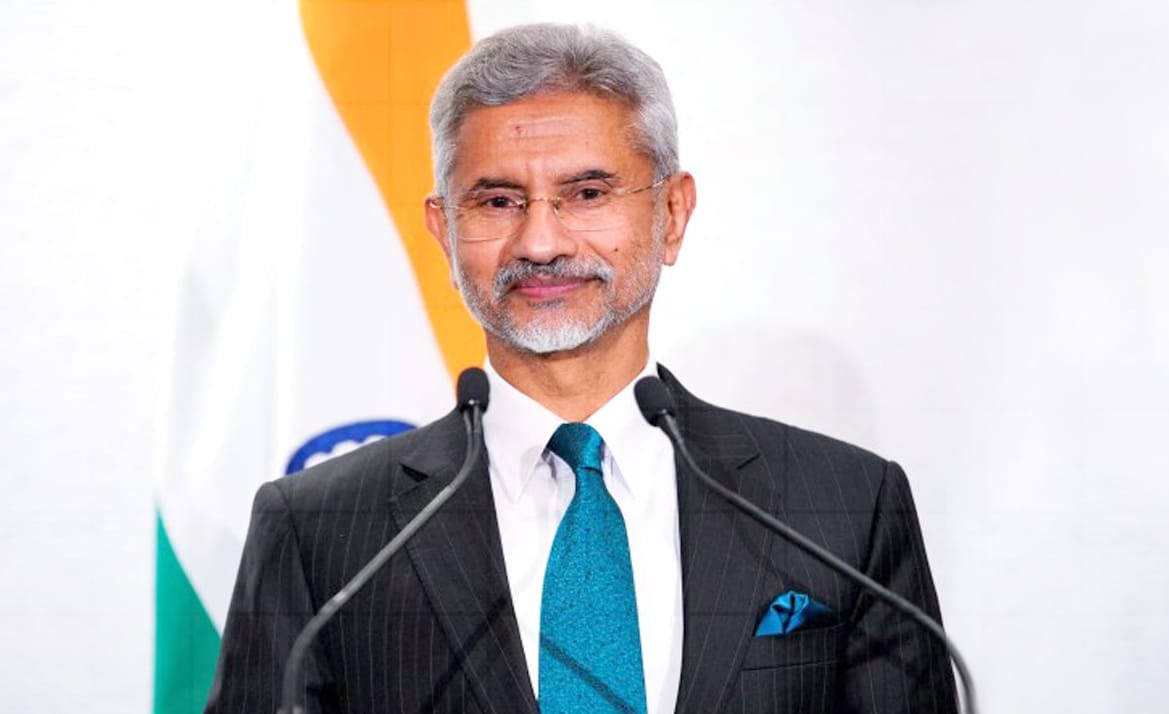
India’s diplomatic stage has recently witnessed one of its most striking moments of assertiveness and clarity. In an interview that has gone viral, External Affairs Minister Dr. S. Jaishankar confronted a European journalist over their critical remark on Operation Sindoor. The interaction, while short, encapsulates a larger truth about India’s evolving foreign policy and the challenges of dealing with international media narratives. This blog post offers an in-depth look into Operation Sindoor, Dr. Jaishankar’s strong rebuttal, and the broader implications for India’s foreign and security policy.
Context: What is Operation Sindoor?
Operation Sindoor was India’s bold military response to a horrific terror attack in Pahalgam, Jammu & Kashmir, on April 22, 2025. The attack, carried out by Pakistan-based terrorists, claimed the lives of 26 civilians, including several tourists. The gruesome incident reignited global concerns about cross-border terrorism and India’s longstanding demand for accountability.
India responded with Operation Sindoor, a meticulously planned airstrike targeting terror infrastructure in Pakistan-occupied Kashmir (PoK) and parts of Pakistan. The Indian Air Force carried out the operation with surgical precision, targeting launch pads and camps used by terror groups like Lashkar-e-Taiba and Jaish-e-Mohammed.
Defense Minister Rajnath Singh described the operation as “a surgeon’s strike, not a carpet bombing,” emphasizing its precision and strategic intent (Times of India).
The Interview: Jaishankar Confronts Western Bias
In an interview with Danish TV2, a journalist questioned India’s decision to carry out military action in response to the Pahalgam attack. The journalist implied that India’s retaliation might have been “disproportionate,” subtly hinting at the age-old narrative of equating the victim with the aggressor.
Dr. Jaishankar, however, did not mince words. He replied:
“When 26 people are killed in a brutal terror attack, is it not the duty of a sovereign nation to respond? To send a message that such acts will not go unpunished?”
He further challenged the journalist’s assumption that India’s response was escalating the situation. Instead, he pointed out that the real escalation began when terrorists crossed into Indian territory and committed mass murder.
Zero Tolerance for Terrorism
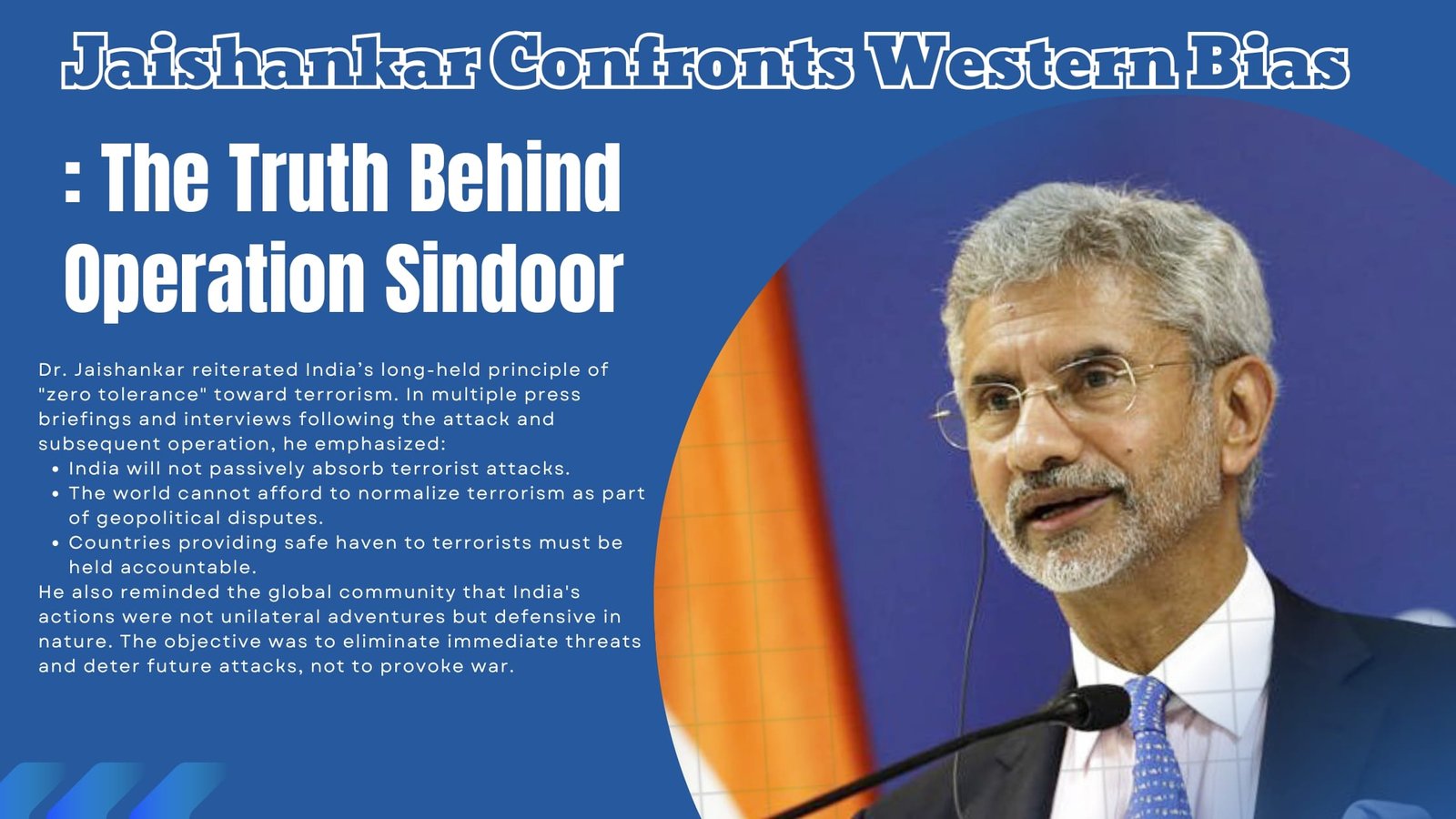
Dr. Jaishankar reiterated India’s long-held principle of “zero tolerance” toward terrorism. In multiple press briefings and interviews following the attack and subsequent operation, he emphasized:
- India will not passively absorb terrorist attacks.
- The world cannot afford to normalize terrorism as part of geopolitical disputes.
- Countries providing safe haven to terrorists must be held accountable.
He also reminded the global community that India’s actions were not unilateral adventures but defensive in nature. The objective was to eliminate immediate threats and deter future attacks, not to provoke war.
As he stated in an interview following the operation:
“This is not about revenge; it is about responsibility. The people of India expect their government to act, and we have done so with dignity and precision.”
Strategic Diplomacy Post-Strike
One of the most overlooked aspects of Operation Sindoor is the quiet but intense diplomatic work that followed. India did not let the airstrikes become the sole narrative. Instead, the External Affairs Ministry launched a comprehensive diplomatic outreach campaign.
Dr. Jaishankar personally spoke with counterparts from:
- Germany
- France
- Japan
- Qatar
He shared intelligence, explained the context of India’s response, and sought alignment in the global stance against terrorism. India’s aim was clear: shape the narrative before hostile voices could distort it.
In these meetings, Dr. Jaishankar emphasized how Operation Sindoor adhered to international law. Article 51 of the UN Charter explicitly allows nations to defend themselves when attacked. India’s actions, he argued, were not just justified, but necessary.
Media Bias and Colonial Hangovers
The interview also exposed a deeper issue: the persistence of colonial mindsets in sections of the Western media. Dr. Jaishankar has, in several forums, criticized the hypocrisy of global powers that either ignore or downplay terrorism when it affects non-Western nations.
He has repeatedly asked:
“Why is terrorism seen as a global issue only when it affects the West? Why is India expected to ‘show restraint’ while others act with impunity?”
This rhetorical question resonates deeply in the Global South, where many countries feel that Western narratives often lack nuance or fairness.
In this particular interview, Dr. Jaishankar dismantled the premise that India needs to justify defending itself. His firm, unflinching tone was a message not just to the journalist, but to the world: India is not the hesitant power of the past.
The Ceasefire and Diplomatic Win
Interestingly, the military response was followed by a quiet but effective diplomatic negotiation. India and Pakistan reportedly reached a ceasefire understanding after backchannel talks. However, Dr. Jaishankar clarified that this understanding was reached without U.S. mediation — countering widespread media speculation.
“This was a bilateral decision. We do not require third-party intervention to safeguard our borders or to restore calm.”
(NDTV)
This demonstrated India’s diplomatic maturity: conducting a hard strike when needed, but also restoring peace through dialogue when the time was right.
Domestic Support and Political Unity
Operation Sindoor received overwhelming support within India. Across political lines, there was consensus that India could no longer afford to treat cross-border terrorism as a law-and-order issue. Even critics of the government lauded the precision and restraint shown during the operation.
Public sentiment, especially in Jammu and Kashmir, was one of relief and renewed confidence in the state’s commitment to protect its citizens. Civil society groups, media, and policy experts largely praised the decision to act decisively yet responsibly.
Global Reactions
- United States: Issued a cautious statement urging restraint but acknowledged India’s right to defend itself.
- European Union: Expressed concern over regional tensions but did not criticize India’s actions.
- Russia and Israel: Expressed strong support, with both countries affirming India’s right to target terrorism at its source.
- OIC: Predictably issued a statement condemning the operation, but its influence in shaping global opinion remained minimal.
The Bigger Picture: India’s Evolving Foreign Policy Doctrine
Operation Sindoor and the diplomatic maneuvers around it are indicative of a broader shift in India’s global outlook. Gone are the days of passive diplomacy. Today, India seeks to be:
- Assertive without being aggressive
- Diplomatic without being submissive
- Strategic without compromising on sovereignty
Dr. Jaishankar, as the face of Indian diplomacy, has become a symbol of this transformation. His clarity of thought, refusal to accept double standards, and unwavering focus on national interest have redefined India’s engagement with the world.
Conclusion: A New India on the World Stage
The exchange between Dr. S. Jaishankar and the European journalist over Operation Sindoor is more than just a viral clip. It symbolizes the emergence of a confident India, unafraid to defend its people and its principles. It also represents a diplomatic shift where India no longer waits for validation from the West but crafts its own narrative and defends it on every platform.
India’s message is clear: terrorism will not be tolerated, sovereignty will be upheld, and diplomacy will be guided by realism and national interest. Dr. Jaishankar’s firm stand is not just policy; it is a declaration of India’s new place in the world.