
📚 Table of Contents
- Introduction
- What Is Emotional Intelligence?
- Self-Awareness Through Rituals & Fasting
- Empathy and Bonding in Family Festivals
- Gratitude and Celebration of Life
- Expression Through Art, Music, and Dress
- Letting Go Through Symbolism
- Resilience Through Cycles of Light and Dark
- Modern Science Catches Up
- Why It Matters Today
- Conclusion
- Frequently Asked Question (FAQs)
1. Introduction
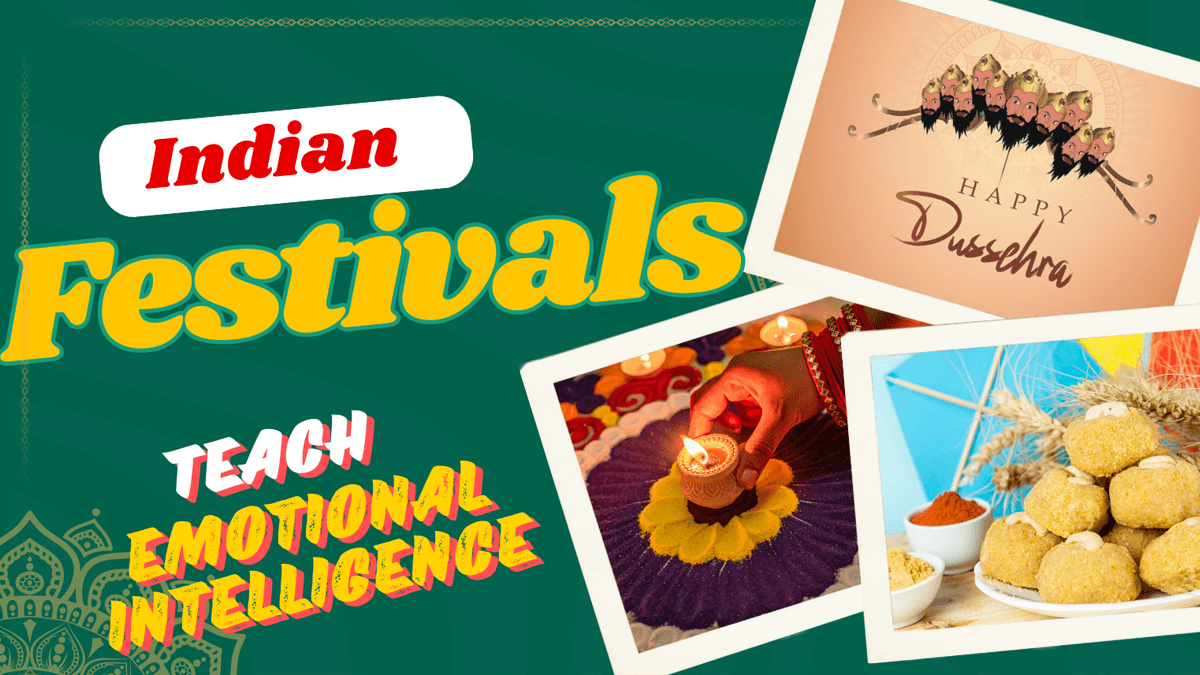
We often associate Indian festivals with joy, rituals, sweets, and colors. But beyond the celebrations lies something deeper—a subtle, powerful education in emotional intelligence (EI).
Modern schools and workplaces talk about EI—self-awareness, empathy, gratitude, resilience, communication. But in India, these qualities are taught not in classrooms but in courtyards, kitchens, and temples—through festivals.
Let’s explore how Indian festivals are more than traditions—they’re training grounds for emotionally strong and spiritually grounded lives.
2. What Is Emotional Intelligence?
Emotional intelligence (EI) is the ability to:
- Understand and manage your own emotions
- Recognize and respond to the emotions of others
- Build healthy relationships
- Adapt to change and handle stress wisely
In today’s fast world, EI is a superpower—and our ancestors knew it all along. Indian festivals were, and still are, designed to teach us these exact skills through participatory celebration.
3. Self-Awareness Through Rituals
Take Ekadashi, Navratri, or Maha Shivratri—fasting is not just physical, it’s emotional discipline.
- You learn to observe cravings, emotions, and reactions
- Simple acts like lighting a lamp or cleaning the altar ground you in routine
- By pausing from regular food and habits, you reflect inward
👉 These small rituals enhance self-regulation and introspection, cornerstones of emotional intelligence.
During these periods, you are more mindful of your thoughts, actions, and inner turbulence. This pause acts as a spiritual detox, enabling clarity.
4. Empathy and Bonding in Family Festivals
Festivals like Raksha Bandhan, Pongal, Diwali, and Ugadi are centered around family unity.
- You remember to check on elders, siblings, and neighbors
- You learn to give without expectation (gifts, sweets, blessings)
- You’re taught to forgive, forget, and reconnect
👉 This builds social awareness and empathetic communication, essential skills in every relationship.
Storytelling and emotional bonding happen naturally when we cook, pray, or celebrate together. These traditions embed a sense of mutual care and sensitivity in our lives.
5. Gratitude and Celebration of Life
Festivals like Makar Sankranti, Onam, or Bihu thank nature—sun, rain, harvest, cattle.
- Children learn that life is not a right, but a gift
- Rituals like feeding cows, honoring rivers, or offering grain teach gratitude and humility
- Even simple customs like folding hands (Namaste) reinforce respect for all forms of life
👉 This cultivates emotional maturity—a sense of being part of something larger.
Practicing gratitude improves emotional balance and resilience—qualities crucial in a hypercompetitive, high-pressure society.
6. Expression Through Art, Music, and Dress
Festivals give safe spaces to express emotions creatively:
- Holi: Playfulness, laughter, color
- Diwali: Awe, light, joy
- Dussehra: Drama, storytelling, courage
- Navratri: Dance, rhythm, divine feminine power
In a society that often suppresses emotion, festivals allow healthy release and celebration of feelings.
👉 This teaches emotional expression without fear or shame.
Kids performing Ramayana skits, elders singing bhajans, women drawing kolams—each act is a channel for self-expression.
7. Letting Go Through Symbolism
Every festival has an element of letting go:
- Burning Ravana (ego) on Dussehra
- Immersing Ganesha in water after Ganesh Chaturthi
- Breaking old pots on Bhogi
- Cleaning the house before Diwali
These are not just symbolic—they teach us how to move on, forgive, and start fresh.
👉 Letting go is a powerful emotional skill—and our culture has embedded it in every season.
When children witness these rituals, they internalize the cyclical nature of life and emotions. Destruction is not the end—it’s preparation for renewal.
8. Resilience Through Cycles of Light and Dark
Indian festivals often reflect duality:
- Navratri moves from darkness to divine light
- Diwali follows Amavasya (dark moon) with lamps of hope
- Holi has both joy (color) and remembrance (Holika Dahan)
These cycles mirror emotional life—ups and downs, destruction and creation.
👉 Kids and adults alike learn: “This too shall pass.” Resilience becomes part of their emotional fabric.
Recognizing that struggle precedes celebration makes one emotionally sturdy and hopeful.
9. Modern Science Catches Up
Neuroscientists now agree:
- Rituals reduce anxiety
- Group celebrations boost serotonin
- Fasting sharpens focus
- Cultural storytelling enhances empathy
Indian festivals didn’t need research papers—they’ve been teaching these lessons for thousands of years.
As more psychologists turn to Eastern wisdom, India’s rituals are being validated as mental health enhancers.
10. Why It Matters Today
In the digital age:
- We’re more connected, but less emotionally in touch
- Children grow up with screens, not stories
- Celebrations have become performance, not participation
Reviving our festivals the right way is a gentle yet powerful way to raise emotionally intelligent, culturally rooted, and mentally healthy individuals.
- Celebrating together fosters empathy
- Rituals offer structure
- Symbolism teaches emotional skills
Festivals are not outdated—they are antidotes to our modern anxieties.
11. Conclusion
Our ancestors didn’t separate spirituality from psychology, or celebration from character-building. Indian festivals are ancient blueprints for emotional intelligence—hidden in plain sight.
So this year, celebrate with your head, heart, and hands. Cook together. Dance together. Give, forgive, and remember.
Because behind every diya, every rakhi, every kolam… there’s a lesson that lasts a lifetime.
12. FAQs:
2. How do Indian festivals develop emotional intelligence in children?
Through storytelling, shared rituals, community participation, and symbolic acts, children learn empathy, self-awareness, gratitude, and how to handle emotions like joy, fear, and sadness in a healthy way.
3. Can rituals like fasting really improve emotional intelligence?
Yes. Fasting during festivals like Navratri or Ekadashi teaches discipline, emotional regulation, and mindfulness. These are key elements of emotional intelligence.
4. What emotional lessons do symbolic acts like idol immersion or Ravana burning teach?
They help individuals process the idea of letting go—of ego, past burdens, and expectations—reinforcing resilience, closure, and the cyclical nature of life.
5. Are there scientific studies supporting the emotional benefits of festivals?
Modern neuroscience supports the value of rituals, community bonding, music, storytelling, and symbolic expression in reducing anxiety and improving emotional health—validating what Indian traditions have practiced for millennia.
6. Why is it important to revive Indian festivals in the modern digital age?
In a world dominated by screens, disconnection, and performance-based living, Indian festivals help anchor individuals in values like empathy, patience, gratitude, and community. They restore emotional depth in our fast-paced lives.
7. How can urban families celebrate festivals in a meaningful, emotionally intelligent way?
Even simple acts—cooking together, lighting diyas, storytelling, dressing traditionally, or doing charity—can nurture emotional bonding and cultural pride without needing grand events or rituals.