
Introduction: Not Just Tech — A Power Play
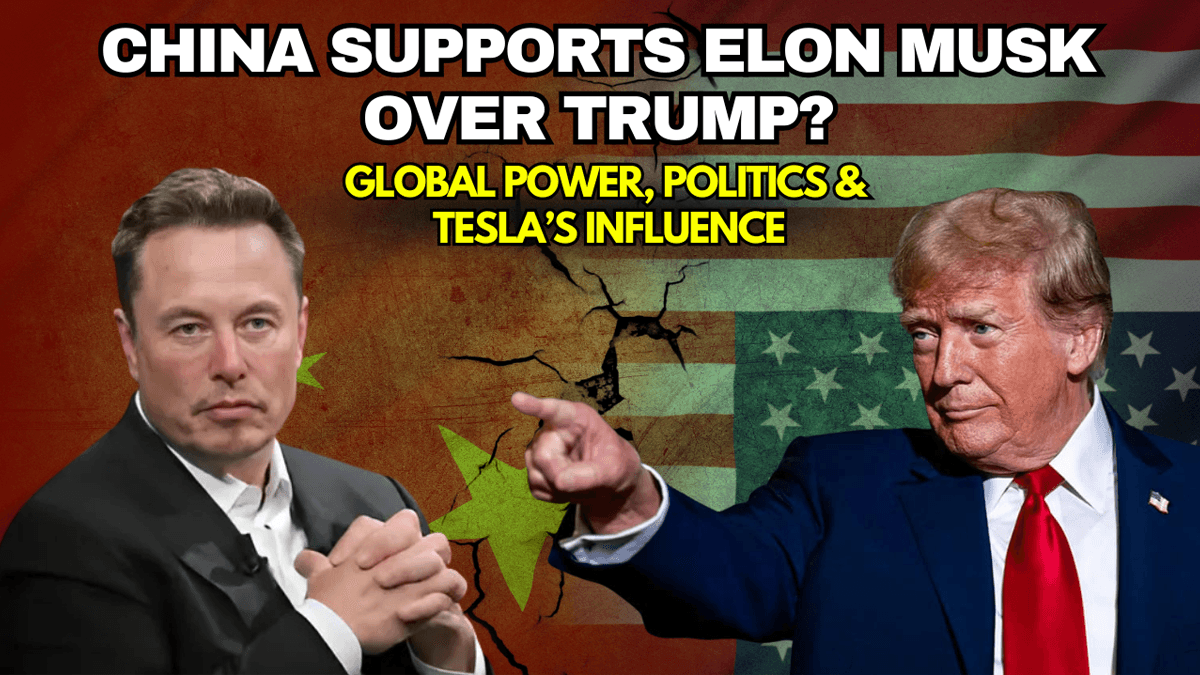
The rift between Elon Musk and Donald Trump isn’t just a celebrity clash or political feud—it’s turning into a geopolitical signal watched closely by global powers, especially China.
While Musk is celebrated across Chinese media and social platforms as a visionary capitalist, Donald Trump continues to symbolize economic confrontation and ideological opposition.
But why is China—an authoritarian state with deep censorship—siding with a tech billionaire from the U.S.?
This post explores the multi-layered reasons behind China’s support for Musk and what it tells us about diplomacy, tech, power, and the future of global alliances.
Musk in China: More Than Business
Elon Musk has deep roots in China, especially through Tesla.
Tesla Gigafactory Shanghai is one of the largest electric vehicle production hubs in the world.
Musk has praised Chinese workers, government efficiency, and policy execution—often in contrast to U.S. regulatory hurdles.
He’s visited China multiple times and met with high-ranking officials, including Premier Li Qiang.
Unlike many American CEOs, Musk hasn’t openly criticized Chinese human rights issues, surveillance, or the Hong Kong crackdown.
This neutral-to-friendly tone earns him a rare celebrity status in China.
The Soft Power of Musk
Musk’s popularity is not just about cars. He’s seen as a symbol of:
Innovation and futuristic leadership
Respectful engagement with Chinese power
A capitalist who’s not afraid to challenge the U.S. establishment
He plays a non-political diplomat—and Beijing knows how to use that to its advantage.
🇺🇸 Trump in China: The Antagonist
In sharp contrast, Donald Trump is viewed with suspicion and contempt in Chinese elite circles.
During his presidency, Trump:
Launched a trade war with China
Imposed billions in tariffs
Targeted Huawei and TikTok
Repeatedly accused China of manipulating global systems
Trump’s strategy was to “decouple” the U.S. from China’s supply chains—a move seen as hostile, even by Chinese moderates.
So, when Musk begins criticizing Trump and teasing a new political movement, it’s no surprise that China leans in with interest.
The Feud That Caught China’s Attention
Musk vs. Trump – The Flashpoint
It all escalated when Musk called a proposed U.S. Senate bill “insane” and hinted at starting a new political party, possibly called the “America Party.”
He accused both Democrats and Republicans of failing the people, while also criticizing Trump’s influence over U.S. policy.
This statement made waves on Weibo, China’s Twitter-like platform, where “Elon Musk” trended with over 37 million views.
Chinese Netizens React
One comment, shared thousands of times, read:
“Brother Musk, you have over a billion of us standing with you.”
Others called him:
“The American who understands China.”
“A global leader, not a nationalist.”
“A visionary who deserves more power than Trump ever did.”
For many Chinese, supporting Musk isn’t just political—it’s symbolic of a more tech-forward, less confrontational future.
Why Beijing Prefers Musk Over Trump
Here’s a breakdown of why Musk is strategically valuable to China:
| Factor | Why It Benefits China |
|---|---|
| Global Influence | Musk controls Tesla, SpaceX, Starlink, and wields influence in tech, energy, and defense sectors. Supporting him gives China indirect soft power reach. |
| Soft Diplomacy | Unlike Trump’s aggressive posture, Musk is seen as someone who “understands” China’s strengths without attacking it. |
| Tech-Dependency Leverage | With Tesla’s operations inside China, Beijing holds some influence over Musk’s business fortunes—making him more responsive. |
| Narrative Weapon | Backing Musk allows China to promote a contrast between constructive innovation (Musk) and disruptive politics (Trump). |
This isn’t fandom. It’s calculated admiration.
U.S. Concerns: The Risks of Musk’s Global Ties
While Musk enjoys China’s praise, U.S. lawmakers are uneasy.
Security Risks
Some fear Musk’s overlap between business and politics could:
Complicate foreign policy
Introduce conflicts of interest with countries like China
Create a backchannel between Washington and Beijing
Musk’s role in critical infrastructure (via SpaceX and Starlink) only amplifies concerns.
Trump Camp’s Growing Suspicion
Trump allies like Marco Rubio and JD Vance have started hinting at concerns, warning against “globalists” who undermine U.S. sovereignty.
Some Trump supporters even call Musk a “tech tyrant” playing politics for profit.
Musk’s Tightrope Walk
Elon Musk has never committed fully to a political identity. One moment he endorses free speech, the next he critiques both left and right. He supports military contracts while also promoting space peace initiatives.
This ambiguity makes him:
Popular among centrists and independents
Useful to foreign powers looking for non-government U.S. allies
A wild card in U.S.–China diplomacy
But that also means he walks a dangerous tightrope—especially as elections approach.
What’s at Stake – A Geopolitical Overview
| Topic | Why It Matters |
|---|---|
| Musk’s Political Role | If Musk forms or influences a political party, global powers will adjust their diplomacy around him. |
| U.S.–China Tech Relations | With Tesla reliant on Chinese infrastructure, Musk could either bridge or break tech ties. |
| Media & Perception Power | Musk’s massive reach (Twitter/X, Neuralink, Tesla fans) gives him the ability to shape public opinion in ways politicians can’t. |
| Global Realignment | China’s support for Musk may mark a shift from traditional political diplomacy to influencer-state diplomacy—a new kind of soft power game. |
Final Thoughts: Musk as a Mirror
Elon Musk is not just a businessman anymore.
He’s:
A tech guru
A media figure
A policy influencer
And increasingly, a symbol of global realignment
China’s open support for Musk reveals more than admiration—it shows a strategic bet on influence over confrontation.
Musk represents the future of diplomacy through industry, where leaders don’t need to hold office to shape global policy.
Will Musk Become:
A peacemaker between economic giants?
A bridge for tech-driven diplomacy?
Or a lightning rod for conflict, trust issues, and ideological chaos?
One thing is certain:
The world is watching.
A billion eyes from China are watching.
And history is taking notes.
FAQs: Why China Is Supporting Elon Musk Over Trump
2. How did the Musk–Trump feud begin?
Musk criticized a U.S. Senate bill and hinted at forming a new political party, directly challenging Trump’s influence over the GOP.
3. Is Musk a risk to U.S. national security?
Some lawmakers worry about his ties to China and role in critical infrastructure (SpaceX, Starlink), fearing blurred lines between business and foreign diplomacy.
4. What does China gain from supporting Musk?
Leverage in global tech narratives, diplomatic soft power, and indirect access to U.S. influence without official channels.
5. Will Musk really enter politics?
He hasn’t confirmed it, but hints and statements suggest he wants to reshape U.S. governance—either directly or through cultural influence.