
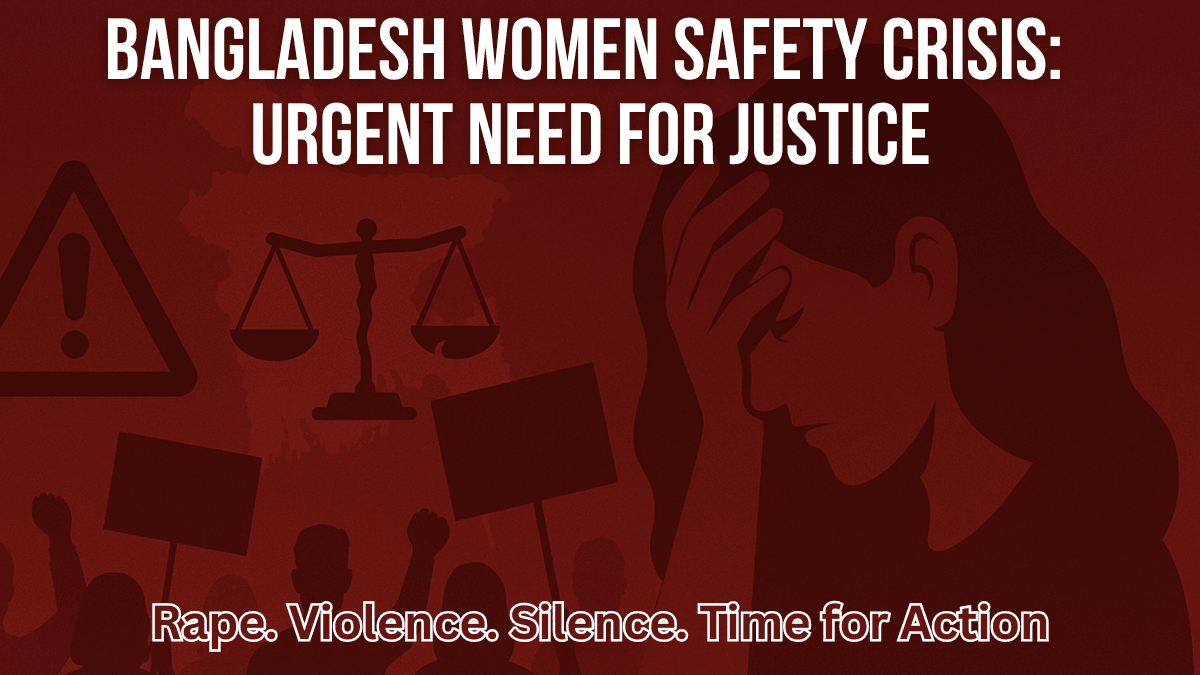
Bangladesh is experiencing a distressing surge in violence against women—spanning rape, attacks on minors, religion and caste-based crimes. Recent tragic incidents and nationwide protests highlight an urgent call for legal and systemic reforms.
Scope of the Crisis
24 rapes in just nine days (June 20–29)—including high-profile cases in Bhola and Cumilla districts—prompted activists to warn of a “pandemic-level crisis” firstpost.comfirstpost.com.
An eight-year-old girl died after being raped by her sister’s father-in-law in Magura, igniting nationwide outrage and demonstrators demanding capital punishment
Data from government and NGOs:
BBS & UNFPA’s 2024 survey: ~70 % of women experienced intimate-partner violence; 41 % experienced it in the past year
Ain o Salish Kendra tracked 4,787 reported rapes between 2020–Sept 2024—approximately one rape every nine hours
Human Rights Support Society recorded 117 incidents of violence/rape in just October 2024
Disproportionate Impact on Vulnerable Groups
Attacks against Hindu women in Cumilla spurred mass protests; social media circulation of assault videos intensified public fury firstpost.com.
High-profile cases against Muslim minors and minority women underscore a disturbing trend of sectarian violence
Justice System: Barriers to Accountability
Survivors face victim blaming and corruption. The Daily Star highlighted police refusal to file cases beyond 72 hours after assault
Human Rights Watch reports on systemic obstacles, including stigma and under-reporting, especially in rural areas .
The Bangladesh Rape News Tracker documented persistent sexual violence, reinforcing calls for transparency and victim protection
Public Response & Policy Shifts
Mass student protests have gained momentum, pushing the government to impose a death penalty for rape (2018 amendment), yet enforcement remains weak
Domestic and international pressure—especially from minorities—has forced political reaction, but progress remains slow.
The UNFPA survey (Feb 2025) reinforced findings: over 300,000 women faced non-partner sexual violence in the previous year, prompting donor-led reform demands
Human rights groups like Manusher Jonno Foundation demanded stronger measures amidst rising violence, particularly targeting women and children
Recommendations: What Must Change
Fast-track rape cases in special tribunals with swift, transparent proceedings.
Expand legal protections: enforce witness and victim safeguards, including survivor anonymity.
Strengthen policing protocols—mandatory case registration, clear timelines, and accountability for delays/corruption.
Revise laws: remove the 72-hour reporting limit, ensure minority women receive equal protection.
Improve data collection: invest in NGOs, community-based reporting to capture unreported incidents.
Launch mass awareness: nationwide anti-violence campaigns, integrate school education, and train law-enforcement sensitively.
🇧🇩 The Way Forward
Bangladesh is at a pivotal point: continued community outrage and protests show that public opinion is shifting. As the government enacts reforms and strengthens enforcement, it’s critical to institutionalize protections and ensure perpetrators face justice.
Only a unified effort—from political leaders to community activists—can dismantle the deeply rooted culture of impunity and secure a safer future for all women and girls in Bangladesh.
❓ Frequently Asked Questions (FAQs)
1. How bad is the violence against women situation in Bangladesh right now?
According to the 2024 UNFPA‑BBS national survey, 70 % of women have experienced intimate partner violence in their lifetime, and 41 % in the past 12 months alone. Meanwhile, non‑partner violence (including sexual assault and rape) remains alarmingly common .
2. Is legal protection effective for survivors?
Despite multiple laws—the Women & Children Repression Prevention Act (2000), Domestic Violence Act (2010), acid‑attack legislation—conviction rates are astonishingly low (often under 2–3 %). Many survivors do not even file complaints due to fear or victim-blaming.
3. What kinds of violence are most common?
Intimate partner violence (IPV) dominates, with emotional and controlling abuses the most reported. Over 54 % of women have faced physical or sexual violence by their husbands at some point. Non-partner crimes include gang rape, sexual assault of minors (e.g. the Magura case), and public attacks like mob violence.
4. What recent high-profile cases highlight the crisis?
The brutal Magura child rape (early 2025) sparked widespread student protests and demands for a special tribunal.
On social media and streets, violent mob responses—including attacks for wearing makeup or selling sanitary pads—have highlighted an alarming cultural regression.
5. What reforms and actions are needed now?
Experts emphasize a multifaceted strategy:
Swift legal enforcement and higher conviction rates
Gender-sensitized policing and judicial training
Community education to dismantle rape culture and victim-blaming
Specialized support services (hotlines, shelters, shelters). Civil society mobilization—especially by students and women’s groups—offers a hopeful path forward.
✅ Final Thoughts
The crisis is deep but not permanent. With public momentum, legal reforms, and societal willingness to challenge patriarchal attitudes, Bangladesh can shift toward protection, accountability, and respect for women’s rights. The “New Bangladesh” must include safety and dignity for all women—home, street, and society.