
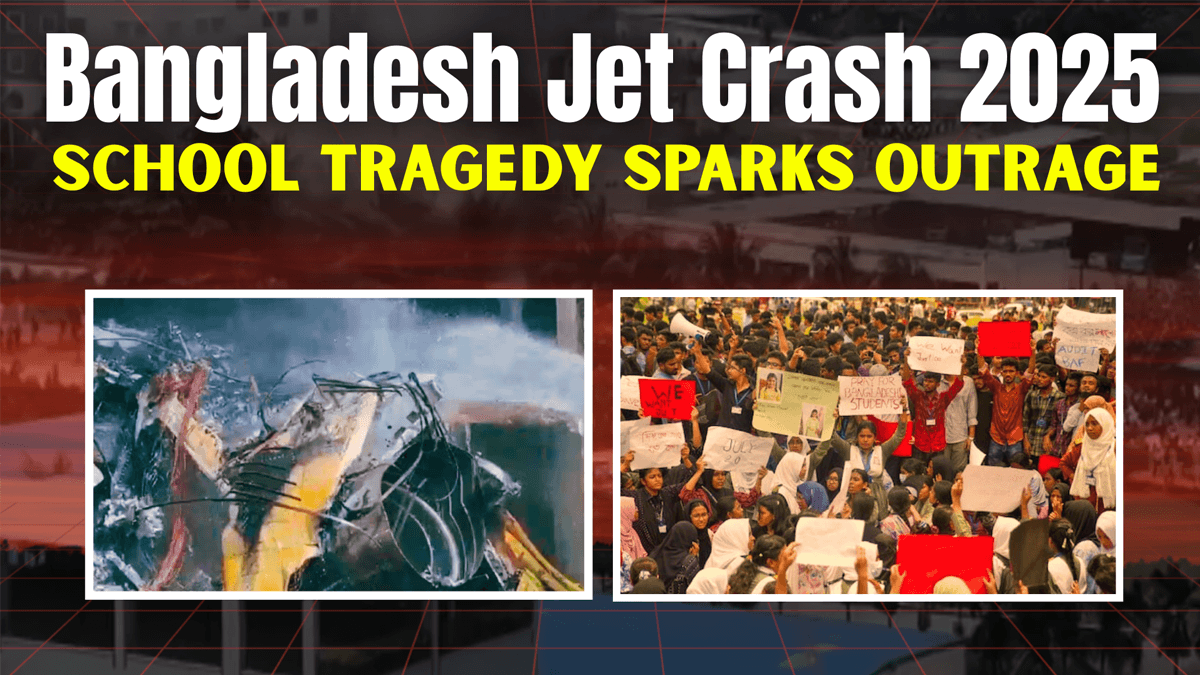
On July 21, 2025, a regular day in Dhaka’s Uttara district turned into a national nightmare when an F-7 BGI fighter jet of the Bangladesh Air Force crashed into the Milestone School & College during a training mission. What should have been just another flight turned into a catastrophe that claimed more than 30 lives—mostly children—and injured over 170 others.
The tragic event, now widely referred to as the Bangladesh Jet Crash 2025, has triggered a wave of national mourning, public fury, and urgent calls for reform in Bangladesh’s military aviation policy.
1. How the Crash Unfolded
The F-7 BGI aircraft had barely taken off from Kurmitola Air Base when it experienced a critical mechanical failure. The young pilot, Flight Lt. Md Toukir Islam, reportedly attempted to steer the aircraft away from densely populated areas—but fate had other plans. The jet slammed into a school building packed with children and teachers, igniting a deadly fire that tore through classrooms.
Eyewitnesses described flames, screaming children, and chaos. The crash site was quickly enveloped in smoke, as emergency services scrambled to rescue survivors.
2. A Teacher’s Final Act of Bravery
Among the dead was Maherin Chowdhury, a teacher whose actions have etched her into the nation’s heart. As the fire spread, she refused to flee. Witnesses say she ran back into the blaze multiple times to pull students out—saving over 20 children before succumbing to her injuries. Her last words reportedly were: “They are also my children.”
She is now being remembered as a symbol of courage, compassion, and sacrifice.
3. Nation in Mourning, Streets in Protest
The day after the crash, the Bangladeshi government declared a national day of mourning. Flags flew at half-mast, and prayer vigils were held across religious institutions. But the sorrow quickly turned to rage.
Thousands of students, parents, and civilians took to the streets in Dhaka, demanding accountability from the military and government. Their demands were clear:
Why are outdated jets flying over schools?
Why aren’t military training zones moved away from civilian areas?
Who takes responsibility for the children lost?
Protestors faced tear gas and baton charges, further escalating tensions and drawing international concern.
4. What Went Wrong? Demands for Answers
The F-7 BGI is a Chinese-built derivative of the Soviet-era MiG-21—an aging aircraft many experts consider outdated and unsafe for densely populated areas. This isn’t the first time concerns have been raised about these jets.
The Bangladesh Jet Crash 2025 has sparked renewed scrutiny of military protocols. Bangladesh’s High Court has already urged the government to form a technical investigation committee that includes aviation safety experts, engineers, and independent observers to probe the mechanical failure, flight path, and training regimen.
5. India Responds Swiftly with Medical Support
In a rare show of regional solidarity, India was one of the first countries to offer aid. Prime Minister Narendra Modi expressed condolences on X (formerly Twitter), and a team of Indian burn specialists and trauma doctors was dispatched to Dhaka within 48 hours.
Indian medical teams are now working alongside Bangladeshi counterparts at Dhaka Medical College and other trauma centers to treat burn victims and provide critical care. India’s gesture of solidarity has been widely praised by both governments and civil society.
6. The Road Ahead: Urgent Reforms Needed
The Bangladesh Jet Crash 2025 is more than just a tragic accident. It’s a wake-up call. The military, civil aviation, and political leadership now face a moment of reckoning.
Key Demands and Next Steps:
1. Grounding Aging Fleet
All F-7 BGI jets must be suspended pending full safety inspections. Bangladesh must expedite procurement of modern training aircraft.
2. Relocating Training Zones
No more flights over cities. Military training must be relocated to isolated, secure airspace.
3. Emergency Preparedness Upgrade
Dhaka’s trauma and burn-care facilities need immediate expansion and upgrades. Emergency drills in schools must become standard practice.
4. Transparent Investigation
The findings of the upcoming investigation must be made public. Accountability—military or civilian—must follow.
5. Victim Compensation & Support
Families of the deceased and injured must receive full compensation, psychological support, and long-term rehabilitation aid. Maherin Chowdhury’s sacrifice deserves national recognition.
7. In Memory, In Resolve
As Bangladesh mourns, the memory of those lost—especially its children—must become a foundation for lasting change. The Bangladesh Jet Crash 2025 wasn’t just a freak accident. It was a failure of systems, oversight, and priorities.
But from grief comes resolve. The country now has a moral obligation to ensure that no parent ever again receives the kind of phone call so many received on that devastating day.
As the nation lowers its flags and holds its prayers, let it also raise its standards—for safety, for accountability, and for its people.
Frequently Asked Questions
2. Who was the pilot involved in the crash?
The pilot was Flight Lt. Md Toukir Islam, a young officer undergoing a solo training mission. He died in the crash after attempting to steer the jet away from residential zones.
3. Who is Maherin Chowdhury, and why is she being hailed as a hero?
Maherin Chowdhury was a teacher at the school who repeatedly entered the burning building to rescue students. She saved over 20 children before succumbing to her injuries. Her bravery has made her a national symbol of sacrifice.
4. What caused the crash?
Initial reports point to a mechanical failure in the F-7 BGI jet. The government has ordered a detailed investigation by a technical committee to confirm the exact cause.
5. Why is there public outrage?
Public anger erupted over:
Use of outdated fighter jets (like the F-7 BGI)
Conducting flight training over densely populated areas
Lack of immediate accountability or reforms
Massive student-led protests have broken out in Dhaka demanding answers and justice.
6. How has India responded to the tragedy?
India expressed condolences and sent a medical team of burn specialists and trauma doctors to Dhaka to assist in treating injured victims. PM Narendra Modi conveyed grief and solidarity via social media.
7. What actions are being taken now?
Key measures underway:
Government-declared national mourning
Formation of an independent investigation team
Calls to ground F-7 jets and move training away from urban areas
Upgrades in emergency medical infrastructure
8. Will the families receive compensation?
Yes. The government has promised financial assistance, long-term medical care for survivors, and national recognition for heroes like Maherin Chowdhury. However, many citizens are demanding more transparent, long-term support mechanisms.