

🗓️ July 22, 2023 – Balochistan:
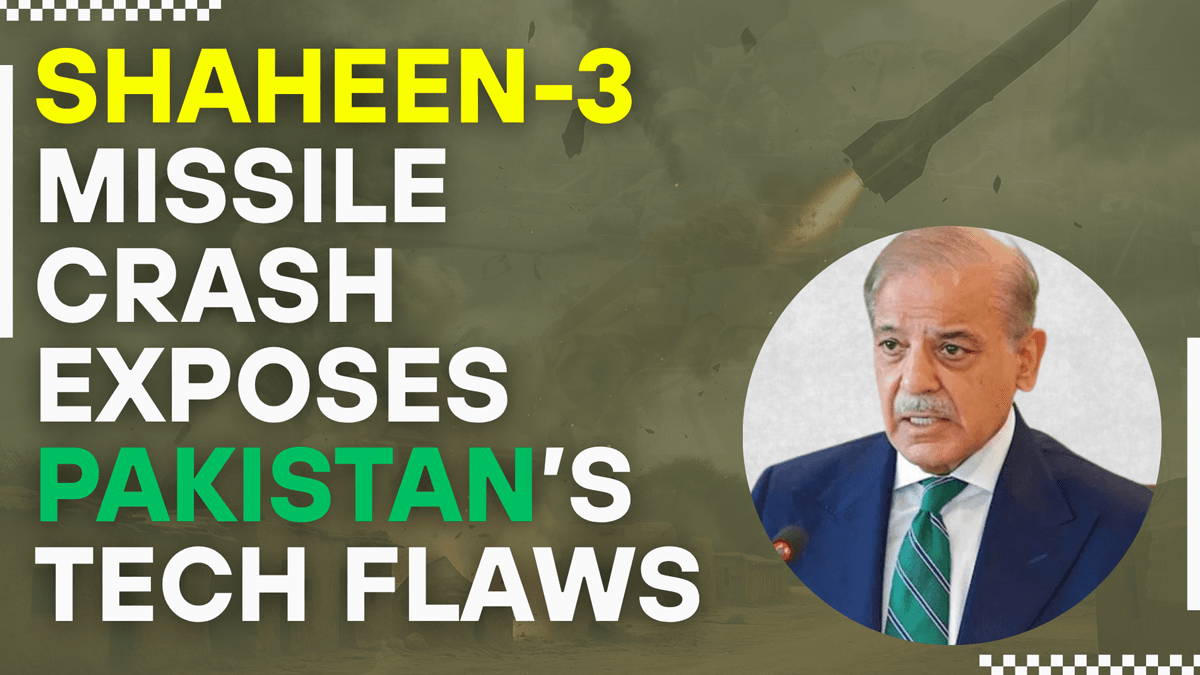
What was supposed to be a demonstration of Pakistan’s strategic deterrence turned into a chilling reminder of its persistent technological failures. Pakistan’s Shaheen-3 ballistic missile, touted as a nuclear-capable asset with a range to strike India’s eastern front, crashed barely 500 meters from a civilian settlement in Balochistan. A disaster narrowly averted—by luck, not by design.
Shaheen-3: A Symbol of Ambition, A Reality of Dependence
Pakistan has long boasted about its missile program, often showcasing names drawn from Islamic history to project ideological strength. But peel back the layers, and what remains is a heavily imported weapons system. The Shaheen-3 and its predecessors rely almost entirely on Chinese technology—from propulsion to guidance systems. Islamabad’s contribution? Cosmetic rebranding and assembly.
This latest crash is not an isolated incident. It is part of a troubling pattern. Over the past five years, multiple missile tests have either failed mid-air or veered off course—each one buried under layers of silence and denial. There is no evidence of robust R&D or credible indigenous engineering backing Pakistan’s ballistic ambitions.
Strategic Instability: Danger Beyond the Border
Pakistan’s tactical ballistic missiles, like the Shaheen-3, are dual-capable—able to carry either conventional or nuclear warheads. And because they can be launched with minimal warning, every test, every launch, triggers alarm bells in Indian strategic circles.
The ambiguity is dangerous. In a crisis, how does India determine if an incoming missile is conventional or nuclear? That ambiguity could push South Asia closer to catastrophic escalation.
The China Factor: A One-Way Street?
While China remains Pakistan’s primary defense partner, the technology pipeline seems to flow in one direction. Beijing has kept its missile propulsion technologies under wraps, refusing to share core advancements even with its closest ally. This lack of transparency reflects a relationship driven by dependency rather than trust.
Pakistan, meanwhile, remains boxed in—unable to innovate, unable to independently troubleshoot, and increasingly reliant on a partner that offers hardware without empowering capability.
Conclusion: A Warning, Not Just to Pakistan
The failed Shaheen-3 test is more than a technical glitch. It’s a glaring sign of how fragile Pakistan’s strategic bluff really is. A country that can’t safely conduct missile tests has no business threatening its neighbors with nuclear rhetoric.
South Asia deserves stability, not shaky missiles and opaque partnerships. Until Pakistan invests in real R&D and transparency, its deterrence will remain hollow—and its tests, potential tragedies in the making.
FAQs:
2. What happened during the Shaheen-3 missile test on July 22, 2023?
The test ended in failure as the missile crashed in Balochistan, just 500 meters from a civilian area, raising serious concerns about its reliability and safety.
3. Why is the Shaheen-3 missile crash significant?
The crash highlights major technical flaws in Pakistan’s missile program and raises questions about the country’s strategic readiness and public safety measures.
4. Is Pakistan’s missile program indigenously developed?
Not entirely. Most of Pakistan's missile technology is sourced from China. Indigenous innovation remains limited, with Pakistan mainly assembling and rebranding imported systems.
5. How does the missile crash impact regional security?
The failed test intensifies concerns over Pakistan’s strategic ambiguity, especially with missiles capable of carrying both conventional and nuclear warheads, which could lead to miscalculation in a conflict.
6. What role does China play in Pakistan’s missile development?
China is Pakistan’s primary defense partner and supplier. However, the partnership lacks transparency, particularly in areas like missile propulsion and advanced technology sharing.
7. Have there been other missile test failures in Pakistan recently?
Yes. Over the past five years, Pakistan has seen multiple test failures, indicating a pattern of underperforming systems and poor technological maturity.