
📚 Table of Contents:
Introduction: Trump’s Trade Threats and Global South Resistance
Operation Sindoor and U.S.-Pakistan Nexus: A Stab in India’s Back?
Introduction: Trump’s Trade Threats and Global South Resistance
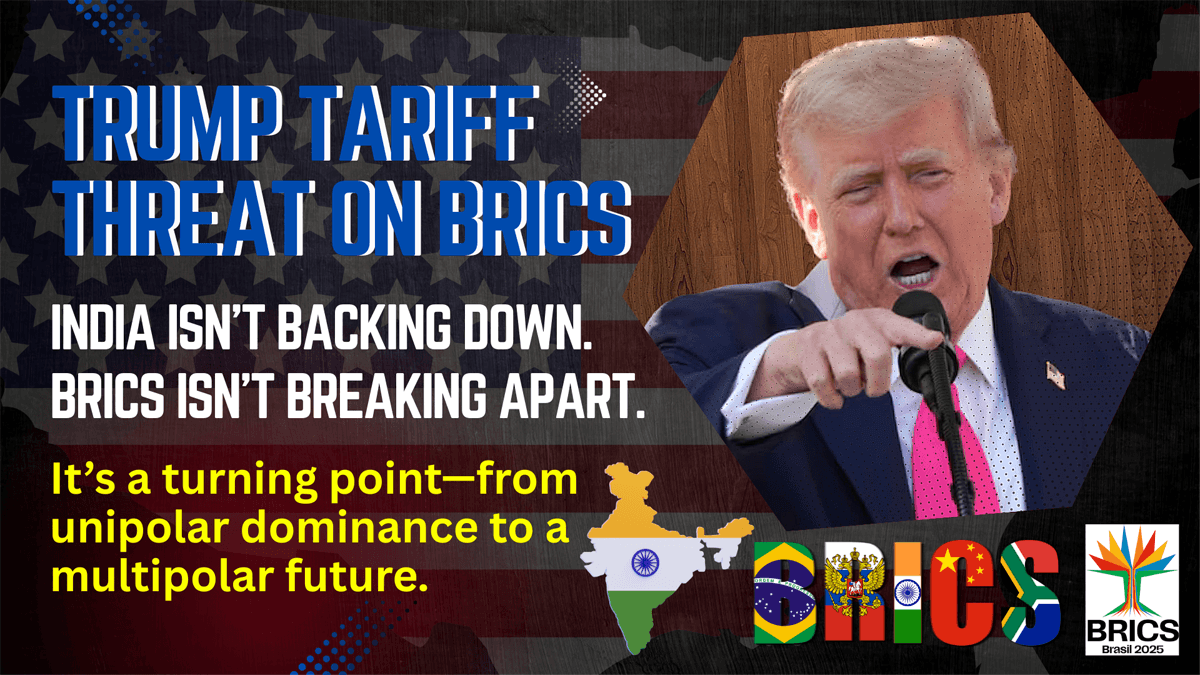
Former President Donald Trump’s renewed rhetoric ahead of the 2025 U.S. elections is once again turning global trade into a battleground. His recent vow to impose sweeping tariffs of up to 50% on BRICS nations—including India—has raised eyebrows and alarms. But beneath the surface lies a deeper pattern: the age-old American habit of rewriting global rules to serve its dominance.
BRICS nations, and India in particular, see through this tactic. These aren’t just tariffs—they are coercive tools designed to punish self-reliance, multipolar collaboration, and economic decolonization.
Tariffs and Double Standards: A Historical Perspective
From the Cold War era to today’s geopolitical chessboard, the United States has repeatedly used economic and trade instruments to maintain global dominance—often cloaked in the rhetoric of security, development, or liberal values. These tools have become pressure valves deployed selectively to influence or suppress independent policy decisions, particularly in the Global South. Below is a deeper look at how these tactics have evolved over time:
a. 1970s Oil Diplomacy: Weaponizing Sanctions
During the Cold War, nations that aligned with the USSR or refused to support U.S. positions found themselves on the wrong end of oil supply blackmail or trade restrictions. For example:
- Iran (pre-1979 revolution) was a Western oil partner; after the Islamic Revolution, U.S. sanctions swiftly followed.
- Cuba faced a full trade embargo after siding with Soviet economic models.
- India’s 1974 nuclear test (Smiling Buddha) triggered U.S. suspension of nuclear fuel and technology exports despite India not violating any treaty.
This era cemented the idea that control over energy and trade routes could be just as powerful as military alliances.
b. 1980s Latin America Debt Crisis: The IMF Trap
Countries like Argentina, Brazil, and Mexico were forced into harsh IMF conditionalities following economic downturns.
- The U.S.-led IMF imposed structural adjustment programs: cutting subsidies, privatizing industries, and slashing public welfare.
- These measures deepened poverty and inequality but protected Western creditors.
- Example: In Bolivia, IMF-imposed wage freezes and public sector cuts led to mass protests and decades of political instability.
While framed as “rescue missions,” these bailouts often turned into long-term traps, keeping these nations economically subordinate.
c. Post-9/11 Trade Leverage: Anti-Terror or Pro-Control?
After the 9/11 attacks, the U.S. began integrating anti-terrorism narratives into trade policy:
- Pakistan was granted trade privileges and military aid despite known terror networks operating within its borders, under the guise of being a counterterrorism partner.
- Countries like Sudan, Iran, and Syria faced sanctions not just for security concerns, but for opposing U.S. regional strategies.
- India, while a key U.S. partner post-2005 civil nuclear deal, was still often denied sensitive technology over perceived “non-alignment”.
The “you’re either with us or against us” doctrine became embedded in economic diplomacy.
d. 2020s Indo-Pacific Strategy: Economic Pressure as Diplomacy
In the current decade, economic coercion has evolved into more subtle forms of arm-twisting, particularly in the Indo-Pacific:
- The U.S. pressures partners to decouple from China, offering trade pacts like IPEF (Indo-Pacific Economic Framework) but demanding loyalty.
- India faced backlash for purchasing the S-400 missile system from Russia—while the U.S. simultaneously armed Pakistan with upgraded F-16 packages.
- Tech export bans, visa restrictions, and financial compliance pressure through FATF have all been deployed to isolate countries that lean toward strategic autonomy.
Today, BRICS alternatives like the New Development Bank (NDB), digital currency trials, and local currency settlements pose a serious challenge to dollar hegemony.
And with that challenge rising, the U.S.—rather than adapt—is choosing panic and pressure.
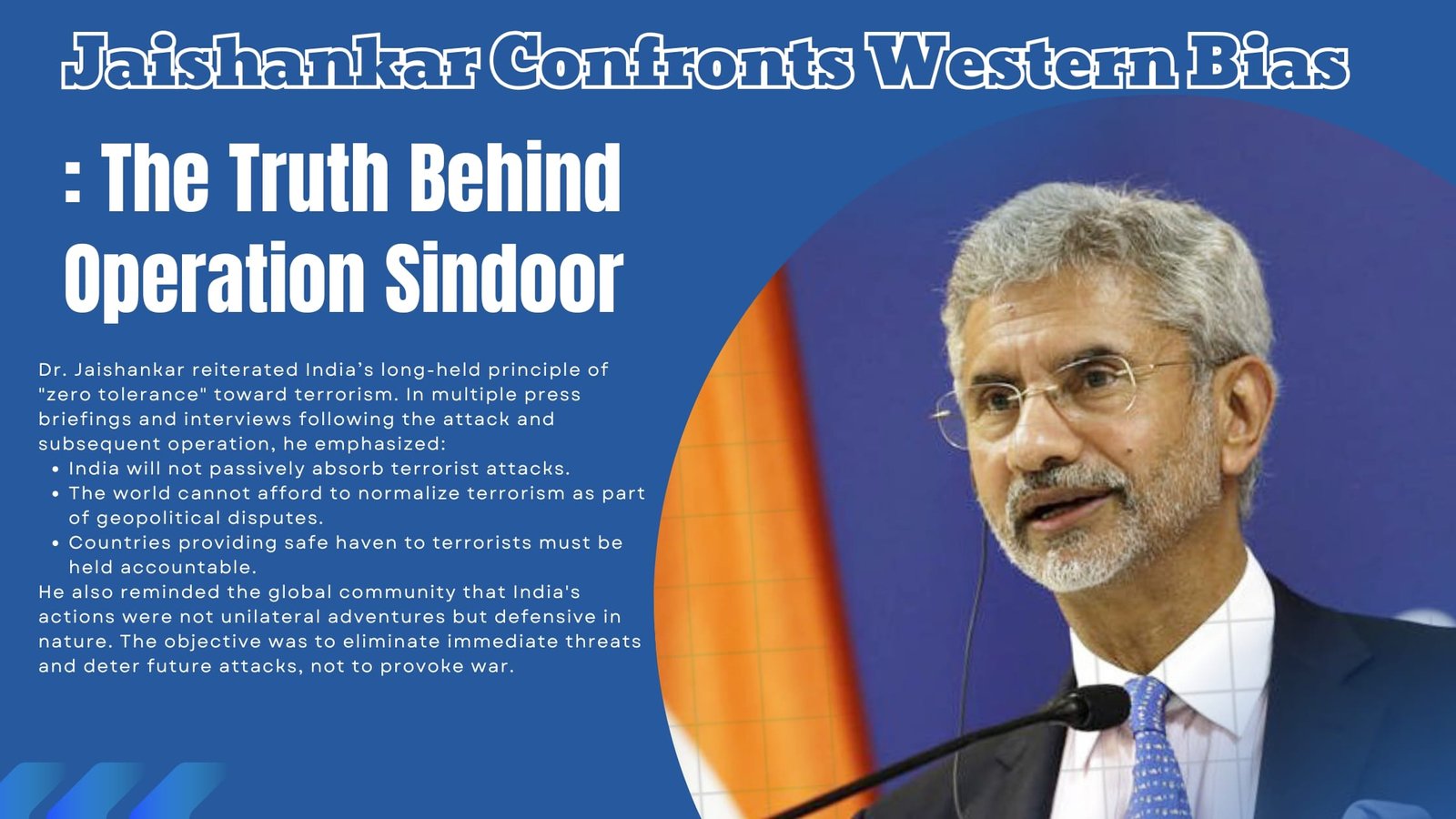
Operation Sindoor and U.S.-Pakistan Nexus: A Stab in India’s Back?
Leaked diplomatic cables and intel reports from Operation Sindoor—an alleged joint surveillance and cyber mission—suggest the U.S. may have tacitly supported Pakistani operatives in monitoring Indian military and space assets. This has deepened Indian suspicions about America’s so-called “strategic partnership.”
India’s security agencies believe Washington’s “counterterrorism cooperation” masks realpolitik alliances that favor Islamabad when convenient. For New Delhi, this is not just betrayal—it’s proof that America’s Indo-Pacific embrace comes with a knife in the back.
BRICS Policies: Sovereignty, Equity, and Multipolarity
Trump labels BRICS policies as “anti-American,” but a closer look reveals these are pro-sovereignty and pro-equity principles shaping a new global order:
- De-dollarization: BRICS nations advocate trade in local or alternative currencies to escape the weaponization of the U.S. dollar and SWIFT sanctions.
- BRICS New Development Bank & CRA: These institutions fund infrastructure and emergencies without attaching IMF-style austerity strings, giving countries control over their own development.
- Local currency trade agreements: India-Russia oil trade in rupees, China-Brazil trade in yuan—cutting out dollar mediation boosts real sovereignty.
- UN and WTO reform demands: BRICS nations call for greater representation and transparency, challenging institutions shaped by WWII-era power politics.
- Food and energy sovereignty: Push for South-South cooperation in agriculture, rare earth mining, and oil refining.
These policies represent not antagonism—but independence from outdated hegemony.
India’s Stance: Fearless, Focused, and Firm
India’s response to Trump’s tariff threats reflects confidence, not confrontation. Here’s how:
- Strategic Autonomy: India doesn’t align blindly with any bloc. Whether dealing with Russia, the U.S., or China—it always acts in national interest.
- Diversified Diplomacy: While BRICS is a priority, India engages with QUAD, I2U2, EU, and ASEAN with equal seriousness.
- Self-Reliance (Atmanirbhar Bharat): Reducing trade dependence, ramping up local manufacturing (especially in defense and semiconductors).
- Resilient Supply Chains: India’s leadership in global south-led pharma and digital sectors allows more flexibility during U.S. restrictions.
New Delhi sends a clear message: It welcomes partnerships—but rejects pressure.
Trump’s Hypocrisy: When Allies Become Targets
Trump’s flip-flop on India and other BRICS nations reveals a deeper contradiction:
- Praise to Pressure: From calling India a “loyal partner” to threatening it with a 30% blanket tariff in the same year.
- S-400 vs. F-16s: India is penalized for defense ties with Russia, while Pakistan gets rewarded with U.S. fighter upgrades.
- Tech Dualism: India’s semiconductor growth faces U.S. export blocks, while American companies get red-carpet treatment.
- Selective Indo-Pacific Loyalty: India is asked to counter China, but is not given trade preferences equivalent to Australia or Japan.
Trump’s unpredictability exposes Washington’s transactional mindset.
How the U.S. Uses Institutions to Suppress the Global South
Global institutions are supposed to promote equity—but often serve American strategic interests:
- FATF Manipulation: While Pakistan’s terror financing often goes ignored, non-aligned nations like Iran or India face heightened scrutiny.
- World Bank Bias: Loans are tied to reforms that often undermine public sectors—like forced privatizations in agriculture and health.
- IMF Austerity: Loans tied to cutting food subsidies, education budgets, and pension systems.
- WTO Patent Favoritism: U.S.-driven IP norms block access to affordable medicines and indigenous tech in developing countries.
These aren’t global tools—they’re mechanisms of control.
The Fallacy of “Anti-American” Labeling
For decades, America has used a binary worldview to label independence as antagonism:
- Latin America’s Leftist Governments? “Anti-American.”
- India’s defense purchase from Russia? “Anti-American.”
- African oil deals with China? “Anti-American.”
- Currency trade bypassing the dollar? “Anti-American.”
But these aren’t acts of aggression—they’re expressions of agency.
Wanting dignity isn’t defiance. The Global South is simply reclaiming voice and choice.
India’s Diplomatic Path: Strategic Autonomy in Action
India has embraced a more assertive and diversified approach to diplomacy:
- Backchannel Engagements: Talks with France, Saudi Arabia, and ASEAN leaders on alternate energy and digital trade.
- Multi-alignment, not Non-alignment: India partners with BRICS, I2U2, QUAD, SCO, and G20—without compromising independence.
- Regional Economic Corridors: IMEC (India-Middle East-Europe Corridor), INSTC (North-South Transport Corridor) increase leverage.
- Currency Swap Deals: With Sri Lanka, UAE, and Russia to stabilize rupee dominance in regional trade.
India’s choices are deliberate, not dictated.
Global South’s Awakening: BRICS as the New Voice
The expanding BRICS bloc is not just symbolic—it’s structural change in motion:
- BRICS+ Expansion: Egypt, Argentina, Ethiopia, and Iran joining to create a more continental balance.
- Alternative Financial Systems: Blockchain-based payment trials in Brazil and South Africa for cross-border trades.
- Agreements Beyond SWIFT: National banks in Russia, China, and India creating direct payment rails.
- Food Security Alliance: Sharing seeds, tech, and policy models for climate-resilient farming.
- BRICS Credit Ratings Agency: Proposed to counter Western bias in Fitch, Moody’s, and S&P.
This isn’t just a bloc. It’s a movement for equity.
What’s Next: Cold Trade War or a Rebalanced Future?
Trump’s proposed tariffs against BRICS could backfire spectacularly. Rather than isolating BRICS, they may serve to unify the bloc even further, accelerating its initiatives toward de-dollarization, regional cooperation, and economic self-reliance.
Here’s what may lie ahead:
- Multipolar Acceleration: The more the U.S. punishes economic autonomy, the faster BRICS and the Global South align to create new poles of power.
- Cold Trade War Scenario: Competing trade blocs, tariff escalation, SWIFT alternatives, and weaponization of tech exports could define this new era.
- Strengthening of South-South Alliances: From joint agricultural innovation to security pacts, countries are turning inward and toward each other.
- India as a Diplomatic Bridge: India may play the role of global balancer—engaging in both Western and Eastern blocs without compromising core interests.
In this unfolding trade standoff, the Global South won’t be intimidated. BRICS will not fracture. India will not retreat. Instead, a rebalanced world order might emerge from this confrontation.
Final Thoughts: India Won’t Bow, BRICS Won’t Break
What we are witnessing is not merely a geopolitical dispute—it is a civilizational turning point. A struggle between an old world order clinging to control, and a new one demanding dignity.
Trump’s rhetoric may echo power, but it’s steeped in fear—fear of losing the monopoly America has held for decades over economics, influence, and narrative.
And yet:
- India stands tall, not as a satellite of the West, but as a sovereign force charting its own course.
- BRICS rises, not as an anti-American bloc, but as a pro-equity alliance aimed at rebalancing the system.
- The Global South speaks, no longer from the margins, but from the center of the new world debate.
The age of coercion is ending. The future belongs to cooperation, not compulsion. And in this era, nations like India will not bow—and BRICS will not break.
❓ FAQs on Trump, BRICS, and Global Power Games
Q2: Is India anti-American?
No. India pursues strategic autonomy and engages with multiple global blocs while firmly defending its sovereignty and interests.
Q3: What is Operation Sindoor and why does it matter?
Operation Sindoor refers to alleged U.S. intelligence collaboration with Pakistan that undermined India’s internal security—seen as a major diplomatic betrayal.
Q4: How is BRICS challenging U.S. global dominance?
BRICS pushes for alternative financial institutions, trade in local currencies, and reform of global governance bodies like the UN and WTO.
Q5: Will Trump's tariff move backfire?
Yes. Analysts suggest it will likely accelerate BRICS unity and the global transition to a multipolar, post-dollar economic order.