

Introduction
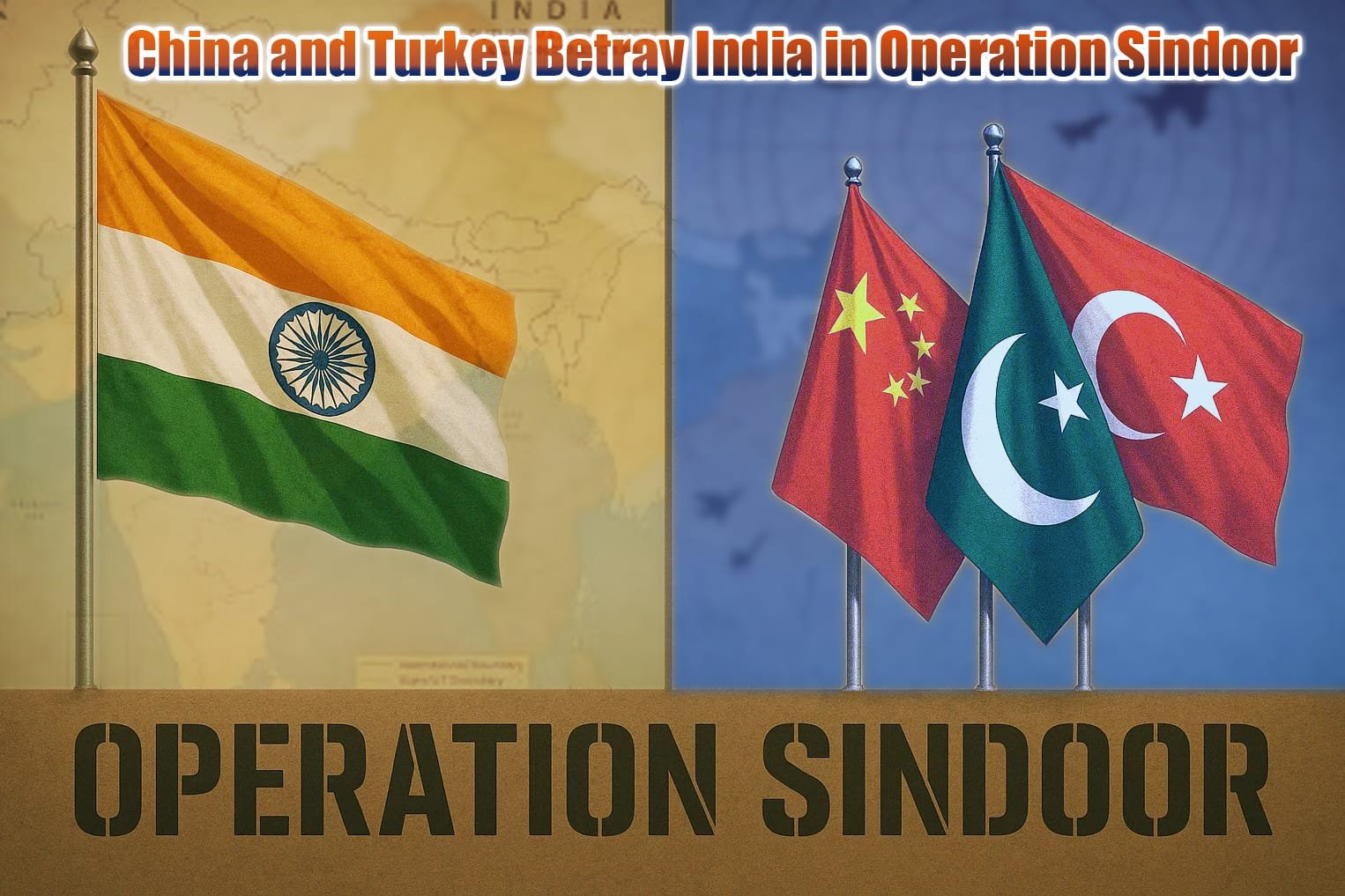
Indeed China and Turkey betrayal in India’s Operation Sindoor, India’s decisive military response to the Pahalgam terror attack, was not just about neutralizing terror camps across the Line of Control. It also exposed the true diplomatic colours of some key regional players. While the world watched, China and Turkey emerged as indirect yet unmistakable supporters of Pakistan, sparking outrage across India. This post dives into how these two nations backstabbed India, the nature of their actions, and the economic, social, and diplomatic repercussions they are now facing.
🇨🇳 China’s “Neutral” Stance—A Calculated Betrayal
1.1 Beijing’s Diplomatic Fence-Sitting
According to Firstpost and Bhaskar English, China officially responded to India’s cross-border counter-terror operation with a carefully worded statement. It expressed “regret” and called for restraint, avoiding any direct criticism of Pakistan—India’s target in the operation. This so-called neutrality, however, failed to mask China’s strategic alignment with Islamabad, its long-time ally.
“We urge both sides to maintain regional stability,” China stated via Economic Times, subtly equating India’s counter-terror move with Pakistan’s terrorism export.
1.2 Indian Sentiment: A Sense of Betrayal
Indian social media erupted in anger. Influencers, commentators, and everyday citizens accused China of shielding Pakistan diplomatically. Even educators like Khan Sir weighed in, stating that “this operation ended up benefiting China and Pakistan more than India.”
1.3 Strategic Dissonance with India
China’s approach contradicts India’s expectations of cooperation, especially on counter-terrorism. With high-level summits approaching, this trust deficit threatens broader bilateral ties. India wants Beijing to stop playing the regional referee and take a moral stand against terrorism—especially when lives are lost on Indian soil.
🇹🇷 Turkey’s Overt Alliance with Pakistan
2.1 Turkey Goes All-In for Islamabad
Unlike China’s diplomatic tightrope, Turkey took a bold, openly pro-Pakistan position. As per Economic Times and India Today, Turkish Foreign Minister Hakan Fidan condemned India’s strikes as “unprovoked aggression” and praised Pakistan’s restraint.
More alarmingly, Turkey was reportedly involved in sending drones and technical support to Pakistan during Operation Sindoor, according to Republic World. This marks a serious escalation—Turkey didn’t just offer words; it offered tactical assistance.
2.2 Nationwide Indian Backlash with China Turkey anti-India move
Indians responded swiftly and strongly:
#BoycottTurkey and #BanTurkey trended across platforms.
Tour agencies like EaseMyTrip, Cox & Kings, and MakeMyTrip suspended travel packages to Turkey.
Cities like Kolkata and Prayagraj saw a 250% spike in trip cancellations, per Times of India.
TTG India reported that 60% of travel bookings were dropped almost overnight.
2.3 Celebrities and Institutions Join In
The pushback wasn’t just digital:
Actor Aamir Khan, previously pictured with Turkish leaders, distanced himself from Turkey and supported the boycott.
Universities like JNU suspended academic ties with Turkish institutions.
Film production houses pledged not to shoot or invest in Turkey going forward.
📉 Tourism and Trade: Turkey Pays a Heavy Price
3.1 Crippled Tourism Sector
With over 2.7–3.3 lakh Indian tourists visiting Turkey annually (Telangana Today), the boycott was a massive blow. India ranked among Turkey’s top 10 tourist sources, and now:
Major platforms issued travel advisories.
28 Indian airports rerouted or cancelled flights to/from Turkey.
An estimated ₹60–75 crore was lost in Kolkata’s tourism sector alone (Financial Express).
3.2 Hit to Turkish Exports
India retaliated economically too. Trade associations boycotted:
Turkish marble, apples, chocolates, and jewellery
Popular markets in Prayagraj and Azadpur ceased importing Turkish goods.
The estimated loss? ₹1,000 crore annually in halted imports, as reported by Times of India.
Additionally, aviation companies like Celebi faced contract terminations, disrupting Turkey’s logistic links with Indian airports.
🧭 Geopolitical Takeaways: India’s New Strategic Clarity
India’s firm response—militarily through Operation Sindoor and economically through targeted boycotts—sends a clear message:
“We recognize who stands with us, and who profits from our pain.”
China and Turkey support of Pakistan have reshaped India’s perception of alliances. This isn’t just about diplomacy—it’s about narrative warfare, ethical positioning, and geopolitical recalibration.
India is now working more closely with like-minded global partners—from Southeast Asia to the Middle East—who understand the seriousness of cross-border terrorism and don’t play both sides.
✅ Conclusion: Betrayal Has Consequences
Both China and Turkey may have tried to play their strategic cards, but in the process, they’ve alienated one of the world’s fastest-growing powers. India’s measured but powerful economic and social retaliation underscores a new foreign policy—one that demands loyalty in actions, not just words.
China Turkey snub India during Operation Sindoor has cost them trust, trade, and tourism, with long-term diplomatic consequences still unfolding.
📌 FAQs
1. Why did China not support India during Operation Sindoor?
China maintained a neutral stance, calling for restraint, which many Indians viewed as implicit support for Pakistan—its close strategic partner.
2. What actions did Turkey take during the operation?
Turkey not only condemned India’s strike but also allegedly provided drones and operatives to Pakistan, according to media reports.
3. How did Indians react to China and Turkey’s stance?
Widespread outrage followed. Indians boycotted Turkish goods and travel, and heavily criticized China’s silence.
4. What was the economic impact on Turkey?
Losses of over ₹1,000 crore in trade and tourism were reported, with travel and trade sectors severely disrupted.
5. Has India changed its foreign policy after this?
Yes, India has become more vocal and assertive, expecting moral clarity from its partners, especially in counter-terrorism.