

Introduction
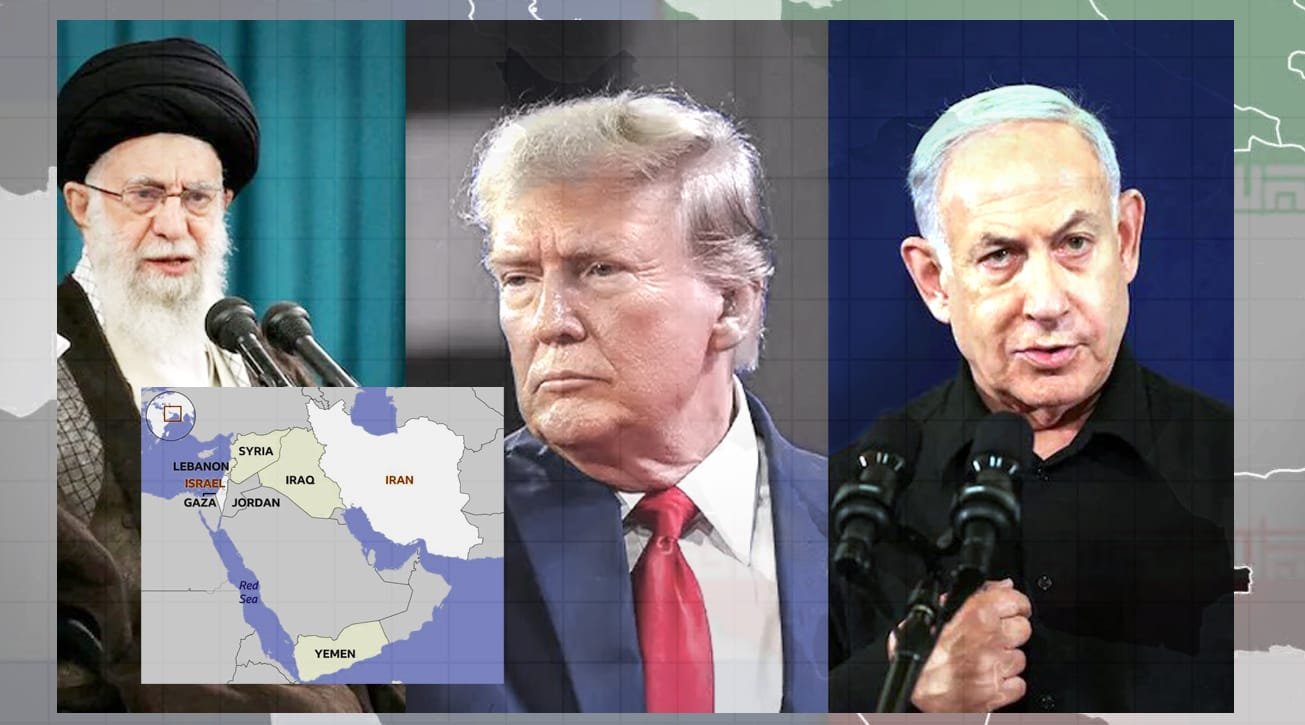
Over the past year, Israel-Iran conflict the longstanding geopolitical tension between Israel and Iran has escalated from shadow warfare to direct military confrontation. What began as a proxy-fueled battle involving groups like Hamas and Hezbollah transformed into a high-stakes regional conflict, culminating in the largest exchange of firepower between the two nations in decades. This post delves deep into the causes, timeline, international implications, and India’s nuanced stance on the matter.
1. Ideological and Historical Context
The roots of the Israel-Iran conflict date back to Iran’s Islamic Revolution in 1979. While Iran adopted an anti-Zionist ideology, Israel viewed Iran’s expanding influence as a threat to regional stability. Over the years, this rivalry manifested in Iran supporting anti-Israel groups such as Hezbollah, Hamas, and Islamic Jihad, while Israel conducted covert operations and strategic airstrikes against Iranian interests in Syria and Lebanon. The situation remained contained until Hamas’s surprise attack on Israel in October 2023.
2. October 7, 2023: The Turning Point
On October 7, 2023, Hamas launched a devastating attack on southern Israel, killing approximately 1,200 civilians and taking hundreds hostage. This marked one of the deadliest days in Israeli history. Investigations by both Israeli and Western intelligence agencies, including the U.S., pointed to Iran’s Quds Force as the backbone of Hamas’s operation.
Iran was accused of:
- Providing financial support.
- Supplying advanced weaponry.
- Training Hamas militants on guerrilla and urban warfare.
While Iran publicly denied involvement, its state-run media celebrated Hamas’s assault, calling it a blow to “Israeli occupation.”
3. Israel’s Military Response: Operation Iron Swords
Israel responded with a full-scale military campaign in Gaza named “Operation Iron Swords.”
Key outcomes:
- Over 55,000 Palestinians were killed or injured.
- Massive displacement and a humanitarian crisis in Gaza.
- Systematic destruction of Hamas tunnels and arms depots.
The operation garnered mixed global reactions. While many Western countries supported Israel’s right to self-defense, they also urged restraint in civilian-populated areas.
4. The War Spreads: Hezbollah, Syria, and the Red Sea
The northern front with Hezbollah in Lebanon quickly ignited. Thousands of rockets were fired into Israeli territory, leading to retaliatory airstrikes.
Meanwhile:
- Iranian proxies in Syria launched missile strikes.
- The Houthi rebels in Yemen, allegedly backed by Tehran, targeted Israeli ships in the Red Sea.
The regional dimension of the conflict expanded rapidly, with Iran coordinating proxy activity across multiple theaters.
5. April 1, 2024: Damascus Strike and Iranian Losses
Israel struck a building near the Iranian consulate in Damascus, Syria, killing top IRGC commanders. This was a calculated move to weaken Iran’s command structure in the region.
Iran vowed revenge, increasing pressure on Tehran to retaliate directly against Israel rather than through proxies.
6. Iran’s Direct Retaliation
In October 2024, Iran launched an unprecedented missile attack on Israel, firing over 200 missiles and drones. While Israel’s Iron Dome intercepted most of them, the message was clear: Iran had entered the battlefield directly.
Israel responded with limited but symbolic strikes inside Iran’s borders, targeting IRGC sites and logistics hubs.
7. June 2025: Operation Rising Lion
In mid-June 2025, Israel launched “Operation Rising Lion,” its most ambitious military operation inside Iran. The strikes targeted:
- IRGC bases.
- Ballistic missile facilities.
- Suspected nuclear enrichment sites.
- Energy infrastructure.
Casualties included high-ranking Iranian officials and military personnel. The Iranian government reported damage to oil refineries and civilian areas.
Iran retaliated with a barrage of missile strikes against southern Israel and U.S. bases in Iraq and Syria, though damage was minimal.
8. Humanitarian Impact
In Israel:
- Hundreds of civilians died in rocket attacks.
- Nationwide mobilization of reservists.
- Political tensions rose over Netanyahu’s handling of security.
In Gaza and Iran:
- Gaza faced complete infrastructural collapse.
- Iran saw massive economic disruption due to strikes on its oil sector.
- Thousands of civilians fled border towns in Iran fearing further Israeli strikes.
9. India’s Position & Impact
India’s Response and Diplomatic Position
Key Highlights:
- PM Modi condemned civilian deaths and called for peace.
- The Indian government reiterated support for a two-state solution.
- India urged both Iran and Israel to exercise restraint.
A. Diplomatic Response
India expressed “deep concern” and urged both nations to show restraint and pursue dialogue
Prime Minister Modi emphasised that “this isn’t the era of war,” underlining India’s commitment to peace timesofindia.indiatimes.com
B. Economic Concerns
Threats to the Strait of Hormuz raised alarms over oil supply, prompting India’s energy firms to diversify further
A rise in crude prices put pressure on India’s rupee and inflation rate, prompting Reserve Bank caution economictimes.indiatimes.com.
C. Strategic Balancing Act
India maintains strong ties with both sides: Israel for security cooperation, Iran for energy and regional connectivity (e.g. Chabahar Port)
New Delhi is navigating a complex web where diplomatic neutrality is key to preserving trade relations and geopolitical interests.
10. Global Reactions and Strategic Shifts
United States:
- Provided military support to Israel.
- Urged restraint to avoid a regional war.
Europe (EU & UK):
- Condemned Iran’s missile attacks.
- Called for humanitarian aid to Gaza.
Russia & China:
- Backed Iran’s right to self-defense.
- Criticized Israel’s deep strikes into Iranian territory.
11. Proxy Warfare: The Next Chapter
Despite the overt exchanges, proxy groups remain a central feature:
- Hezbollah suffered significant setbacks but remains operational.
- Houthi threats to Red Sea trade routes continue.
- Hamas is weakened but not eliminated.
Iran is expected to rebuild and redirect its asymmetric warfare strategy.
12. Nuclear Angle and Global Fears
Amid the conflict, Iran reportedly accelerated its nuclear enrichment efforts. Israeli intelligence claimed that Iran was closer than ever to weapons-grade uranium.
The IAEA expressed concerns over limited access to Iranian facilities.
A broader war involving nuclear capabilities could destabilize the entire Middle East.
13. Potential Future Scenarios
A. Prolonged Escalation:
- A new round of direct strikes could lead to a region-wide war.
- Proxy groups may intensify attacks on Israeli and Western interests.
B. Diplomatic De-escalation:
- Mediation by countries like India, Qatar, and Egypt could pave the way for ceasefires.
- A new round of nuclear talks could emerge.
C. Energy and Economic Realignment:
- Nations may diversify oil sources.
- Alternative trade routes (like the India-Middle East-Europe corridor) gain importance.
Conclusion
The Israel-Iran conflict over the past year has shattered decades of indirect warfare norms. With Iran directly engaging Israel, and Israel penetrating Iranian borders, the Middle East stands at the brink of a larger conflict. While world powers maneuver through a minefield of diplomacy, India’s cautious yet confident foreign policy offers a blueprint for balance.
As the world watches closely, one truth stands clear: sustained peace will require more than ceasefires—it demands a shift in ideological and strategic paradigms. Until then, the region remains in a delicate and dangerous equilibrium.
Frequently Asked Questions (FAQs)
1. What triggered the recent escalation between Israel and Iran? The conflict sharply escalated after Hamas, reportedly supported by Iran, attacked Israel on October 7, 2023, killing over 1,200 civilians. This led to a chain reaction of military responses from Israel and a broader regional escalation involving direct Iranian retaliation.
2. How was Iran involved in the October 7 Hamas attack? Iran was accused of providing financial aid, military training, and advanced weapons to Hamas. Though Tehran denied direct involvement, several intelligence reports linked Iran’s Quds Force to operational support behind the scenes.
3. What is Operation Rising Lion? Launched in June 2025, Operation Rising Lion was Israel’s direct military operation inside Iranian territory. It targeted IRGC bases, missile facilities, and suspected nuclear sites, marking a significant shift from proxy warfare to open confrontation.
4. What role did India play during the Israel-Iran conflict? India maintained a neutral and balanced stance, urging peace and restraint from both sides. While condemning civilian casualties, India reiterated its support for a two-state solution and highlighted the strategic risks to its energy and trade interests.
5. Could this conflict lead to a broader war or nuclear confrontation? Yes, the risk remains significant. With Iran accelerating nuclear enrichment and Israel expanding military operations, the potential for a larger regional or even global conflict looms unless diplomatic solutions are prioritized.

May God help us out of all these conflicts.